
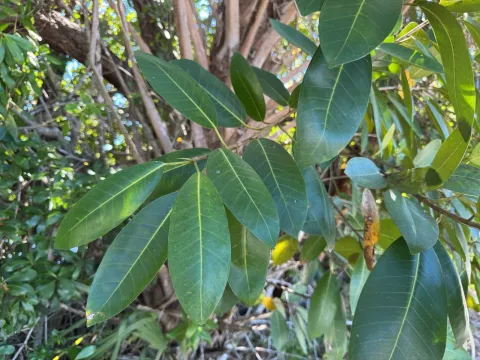
Florida strangler fig
Ficus aurea
The Florida strangler fig (Ficus aurea) is a dominant tree species within the Moraceae family. It is renowned for its unique biological strategy known as the strangler habit, where the plant germinates as an epiphyte in the canopy of a host tree and eventually sends down aerial roots that encompass the host.
What the section contains
Florida strangler fig
The native range of this species extends throughout the tropical regions of Florida, Mexico, and the Caribbean. It thrives in various ecosystems, including hardwood hammocks and coastal areas, where it provides critical food resources for local fauna through its year-round production of figs.
Climatically, Ficus aurea demands tropical or subtropical conditions with high humidity and consistent temperatures. It is highly intolerant of frost, which limits its outdoor cultivation to USDA hardiness zones 10 and 11, requiring protective measures if temperatures drop unexpectedly.
Agronomic requirements emphasize the need for well-draining, nutrient-rich soil. The species is highly adaptable to various soil pH levels but suffers significantly under waterlogged conditions. Proper irrigation management is vital for maintaining vigor and preventing structural root damage.
In terms of agricultural and horticultural use, the Florida strangler fig serves primarily as a landscape ornamental. It is frequently utilized in large-scale park designs for its shade-providing canopy, dense structure, and high tolerance to pruning, making it an excellent candidate for managed spaces.
Major pests affecting Ficus aurea include scale insects and mealybugs, which tend to congregate on the stems and leaf axils. Persistent infestations can weaken the tree, necessitating the use of horticultural oils or systemic insecticides to regain control over the population.
The two-spotted spider mite is a common threat in arid environments, causing leaf yellowing and premature shedding. To manage this, maintaining consistent humidity levels around the foliage is the most effective cultural practice for prevention.
Fungal pathogens such as leaf spot are common when the canopy remains damp for extended periods. Improving airflow and ensuring the foliage dries out quickly after rainfall or irrigation are critical steps in managing and preventing the spread of these fungal infections.
Root rot, often caused by Pythium or Phytophthora species, occurs when drainage is inadequate. This condition is difficult to treat once advanced, making the implementation of proper soil aeration and drainage systems the primary line of defense in cultivation.
Environmental stress, such as mechanical damage during storms, can create entry points for pathogens and wood-boring insects. Proper maintenance and structural pruning are recommended to keep the tree resilient against environmental damage and subsequent biotic threats.