
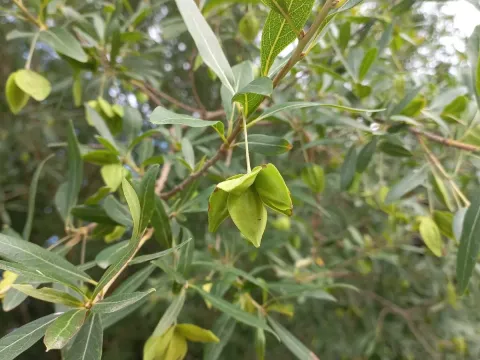
Southern terminalia
Terminalia australis
Southern terminalia (Terminalia australis) is a significant woody species belonging to the Combretaceae family. It is a perennial tree known for its structural wood properties and its ability to thrive in specific South American biomes.
What the section contains
Southern terminalia
The native range of this species extends across Argentina, Uruguay, and Southern Brazil. It is well-adapted to warm climates and requires consistent exposure to sunlight, which is essential for the tree's photosynthesis and wood density development.
Regarding soil requirements, the species performs best in well-drained, fertile substrates. While it shows some resilience to variable moisture, optimal growth is achieved in deep soils where roots can penetrate freely without the risk of long-term waterlogging.
Agrotechnical management involves careful selection of planting sites and initial protection of saplings. Proper spacing is mandatory to ensure that each tree receives enough nutrients and light, which ultimately dictates the quality of the harvested timber.
The economic importance of Terminalia australis is centered on its utility as a source of durable timber for construction and furniture manufacturing. Additionally, it plays a role in environmental restoration projects within its native geography.
The primary threats to Terminalia australis plantations involve soil-borne pathogens that can lead to root degradation. High-humidity conditions in non-draining soils often exacerbate these pathological risks, necessitating a proactive site management strategy.
Insect pests, particularly wood-boring beetles, pose a recurring challenge for plantation health. Regular inspection and the removal of compromised timber are the standard practices used to prevent the spread of infestations across the planting area.