
Dwarf she-oak
Allocasuarina humilis
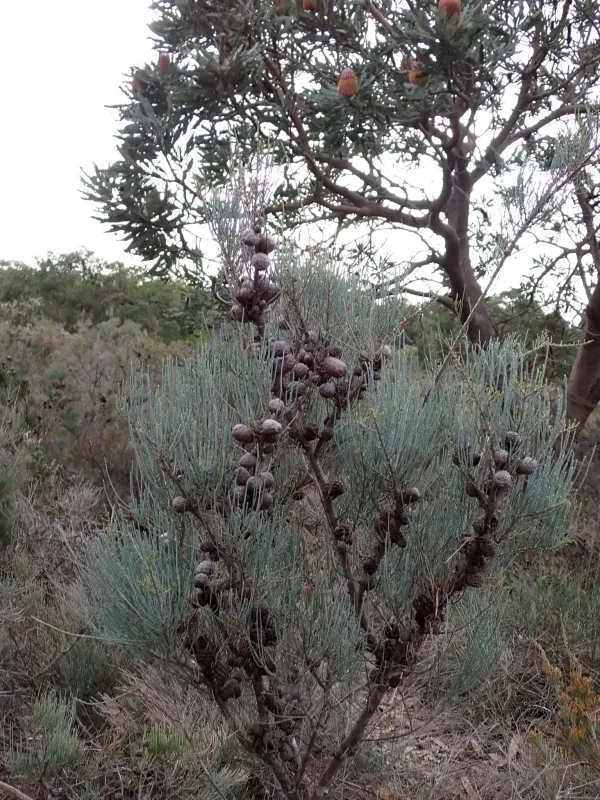
Description
Growing requirements
Allocasuarina humilis, commonly known as the dwarf she-oak, is an evergreen shrub belonging to the Casuarinaceae family. It is a species native to the southwestern region of Western Australia, naturally occurring in sandy or gravelly soils where few other plants can thrive.
This species is highly adapted to a Mediterranean climate with hot, dry summers and cool, wet winters. Its physiological traits allow it to tolerate extreme drought conditions, making it an excellent candidate for xeriscaping and environmental restoration projects.
Botanically, the plant is characterized by its distinct segmented, needle-like branchlets. These structures are the primary photosynthetic organs of the plant, which helps significantly in reducing water loss through transpiration compared to broad-leaved species.
Successful cultivation of Allocasuarina humilis requires well-draining, acidic to neutral soil. It is essential to avoid sites prone to waterlogging, as the root system is highly susceptible to decay in saturated environments, even in its native habitats.
Beyond its ecological value, the shrub is widely used in landscape architecture for its unique texture and color. It serves as an effective windbreak and provides shelter for various native bird species when planted in naturalistic garden settings.
Main diseases and pests
The primary threat to the longevity of Allocasuarina humilis is Phytophthora dieback, a soil-borne fungal pathogen. Once the roots are infected, the plant typically declines rapidly, making prevention via strict soil hygiene and proper drainage absolutely necessary.
Various insects, such as gall-forming wasps, can infest the branchlets, causing structural deformities. While rarely lethal, these infestations can significantly impact the aesthetic value of the plant in a landscape setting.
Poor site preparation often leads to competition with aggressive weeds, which can stifle the growth of young shrubs. Implementing organic mulch or weed-suppressing landscape fabric during the early establishment phase is highly recommended.
Extreme frost, while generally tolerated by established plants, can cause damage to young foliage in cooler climates. Protective measures, such as covering the plants during unprecedented cold snaps, may be required for younger specimens.
Systemic maintenance, including the monitoring of branchlets for discoloration or unusual growths, is vital for long-term health. Timely pruning of affected branches can prevent the further spread of localized pests or fungal infections.