
Western Australian sheoak
Allocasuarina fraseriana
Description
Sowing dates
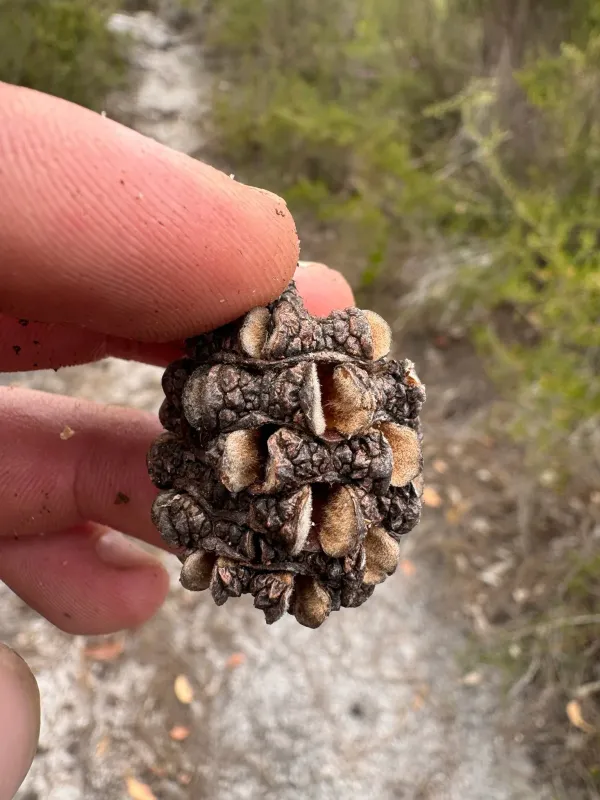
Allocasuarina fraseriana is typically propagated from seeds gathered from the woody, cone-like fruits produced by mature female trees.
Harvesting should occur once the cones turn brown, indicating that they are ready to release their winged seeds for future planting.
For nursery cultivation, seeds are sown in free-draining sandy media to prevent fungal infections that often affect young seedlings.
Strategic sowing in early spring allows seedlings to establish strong root systems before the onset of the hot and dry summer months.
Proper density management in the nursery is essential to ensure that each sapling develops a straight trunk, which is vital for later timber quality.
Growing requirements
The species thrives in well-drained, nutrient-poor sandy soils, which are characteristic of its native habitat in Western Australia.
Allocasuarina fraseriana is highly drought-tolerant and requires minimal irrigation once the trees are firmly established in their permanent locations.
Full sun exposure is a critical requirement for this species, as it does not compete well in shaded environments or dense forest canopies.
The tree enters into a symbiotic relationship with nitrogen-fixing bacteria, allowing it to improve soil health while growing in challenging landscapes.
Regional climate conditions should mirror the Mediterranean-type environment, as extreme frost or waterlogged soil can lead to significant tree stress.
Main diseases and pests
While relatively robust, the species can be susceptible to root rot diseases if planted in soils with poor drainage capacity.
Borers and wood-boring insects may attack weakened or stressed trees, often leading to structural damage if not monitored by forestry specialists.
Local herbivores, such as wallabies and kangaroos, often graze on young saplings, necessitating protective barriers during the initial establishment phase.
Fungal pathogens can occasionally affect seedlings in high-humidity nurseries, requiring the use of balanced fungicides and proper ventilation.
Fire risk management is crucial, as the tree’s oily foliage and high density make it combustible during prolonged dry summer periods.
Harvesting
Harvesting of Western Australian sheoak is typically performed on mature stands that are between 30 and 50 years of age for optimal timber yield.
The timber is highly valued in the furniture and woodworking industries for its beautiful grain pattern, which requires careful processing.
Logs are harvested and transported to mills where they are sawn into planks, with special attention given to the drying process to prevent warping.
Secondary forest products, such as decorative wood offcuts or biomass for fuel, are also recovered during the harvest to maximize efficiency.
Sustainable harvesting plans are essential to balance economic production with the preservation of the local ecosystem and future regrowth.