
River She-oak
Casuarina cunninghamiana Miq.
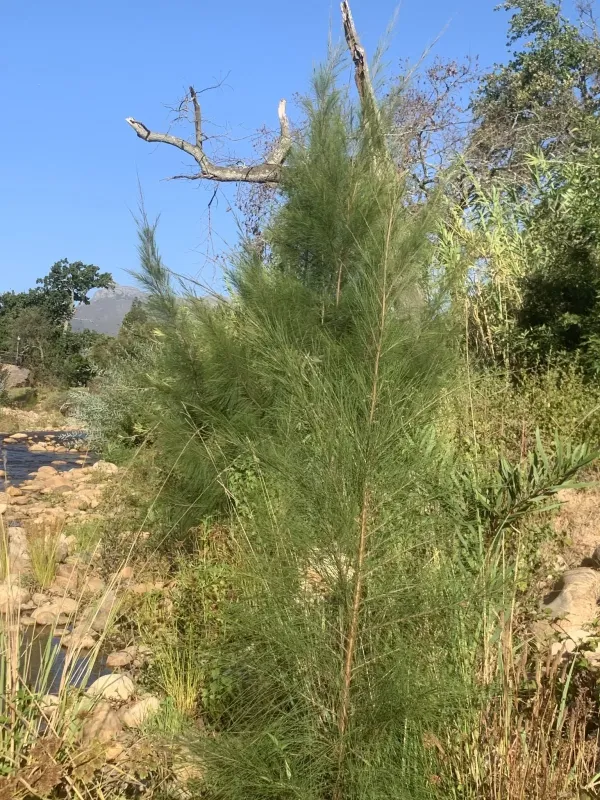
Description
Sowing dates
Propagation of Casuarina cunninghamiana in commercial forestry is primarily achieved through seeds or cuttings within controlled nursery environments.
Seeds are sown in well-drained substrates, maintaining consistent moisture levels until germination, which typically occurs within two to four weeks.
Seedlings require transplantation into larger containers or field plots once they reach a height of 20 to 30 centimeters to ensure better establishment.
The optimal planting time in the field is at the onset of the rainy season, allowing the root system to adapt before the dry period begins.
When using vegetative cuttings, it is crucial to apply rooting hormones, as mature shoots of the she-oak can be challenging to propagate without high humidity conditions.
Growing requirements
Casuarina cunninghamiana belongs to the Casuarinaceae family and is a resilient evergreen tree capable of adapting to a wide range of climatic zones.
The species prefers well-drained sandy or alluvial soils but exhibits high tolerance to salinity and nutritionally poor environments.
A unique biological feature of this plant is its symbiosis with actinomycetes of the genus Frankia, which fix atmospheric nitrogen, naturally enriching the soil and promoting rapid growth.
For optimal vegetation, the plant requires intense sunlight, making it essential to establish plantations in open, well-lit areas with minimal shade.
While the tree is known for its drought resistance, early-stage saplings require supplemental irrigation to facilitate the development of a deep root system.
Yield
Economic utilization of this culture focuses on biomass production, high-density timber, and the establishment of protective forest windbreaks.
Under favorable conditions, plantations can demonstrate an annual wood increment of up to 15–20 cubic meters per hectare, enhancing its economic viability.
The wood of the River She-oak is exceptionally hard and durable, commonly used for poles, piles, tool handles, and as a high-quality fuel source.
In agricultural practice, the tree is widely utilized for windbreak strips that significantly reduce soil erosion and protect crops from damaging winds.
The leaf litter, consisting of fine phylloclades, creates a dense mulching layer that effectively suppresses weed growth under the canopy of the stands.
Main diseases and pests
The primary threat to these plantations is root rot caused by fungal pathogens, often triggered by waterlogging or inadequate soil drainage.
Young trees are susceptible to various insect pests, including lepidopterans and specific wood-boring beetles that damage the bark and cambium layers.
High-density plantings may be prone to infections by Phytophthora species, which can cause crown wilting and eventual mortality of the trees.
Effective management includes strict adherence to silvicultural norms, such as controlling planting density and the prompt removal of infected individuals.
- Regular monitoring of bark integrity.
- Maintaining optimal spacing between trees.
- Ensuring adequate site drainage.