
Casuarina glauca
Casuarina glauca Sieber ex Spreng.
Description
Growing requirements
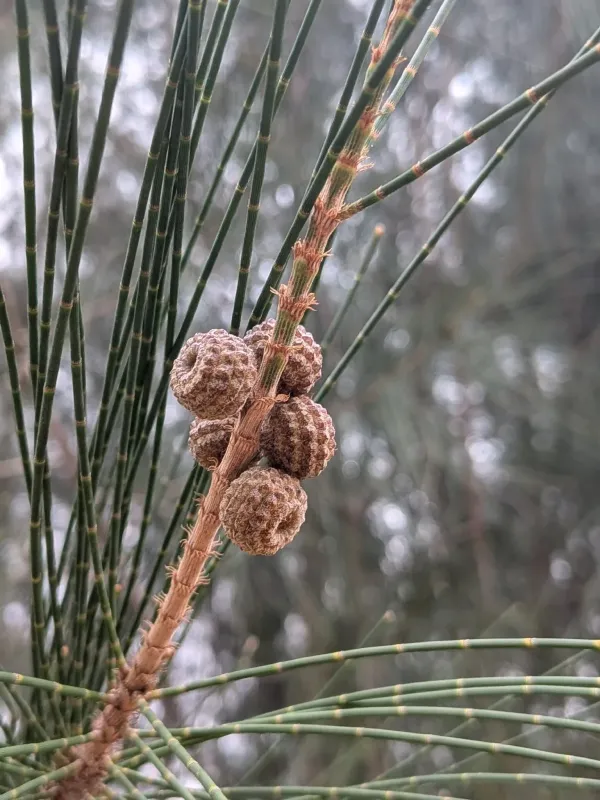
Casuarina glauca, commonly known as the swamp oak, belongs to the Casuarinaceae family. It is a perennial, evergreen tree species native to the coastal regions of Australia, distinguished by its unique needle-like branchlets that mimic the appearance of conifers.
The crop thrives in full sun and requires well-drained but moist soils to reach its maximum growth potential. One of its most significant agronomic features is its high tolerance to saline conditions and wind, making it an excellent choice for coastal shelterbelts and land reclamation.
This species forms a symbiotic relationship with Frankia bacteria, which allows it to fix atmospheric nitrogen. This biological trait significantly improves soil fertility in nutrient-poor areas, acting as a natural fertilizer for the surrounding ecosystem.
Climate-wise, the tree is suited for tropical and subtropical environments. It is sensitive to severe frost, which limits its outdoor cultivation to temperate regions with mild winters or protected greenhouse environments.
Cultural management involves minimal intervention once established, as the tree is remarkably drought-tolerant. However, during the initial planting phase, consistent watering is essential to ensure deep root establishment and survival against environmental stress.
Yield
The economic value of Casuarina glauca lies primarily in its dense, durable wood, which is highly sought after for fencing, construction, and high-quality charcoal production. Its timber is famous for its resistance to biological degradation and its impressive structural density.
Beyond wood production, the species is vital for environmental restoration. Its extensive root system prevents soil erosion and stabilizes sandy substrates, providing a sustainable solution for the rehabilitation of degraded coastal landscapes.
Main diseases and pests
The primary threats to the species involve fungal diseases that affect the roots, often triggered by waterlogged soil conditions. Proper site selection and drainage management are critical to preventing root rot outbreaks.
Pest issues include certain wood-boring beetles that can infest stressed trees. Integrated pest management strategies, such as maintaining tree vigor and regular monitoring, are effective ways to protect the stands from significant damage.