
Casuarina equisetifolia
Casuarina equisetifolia L.
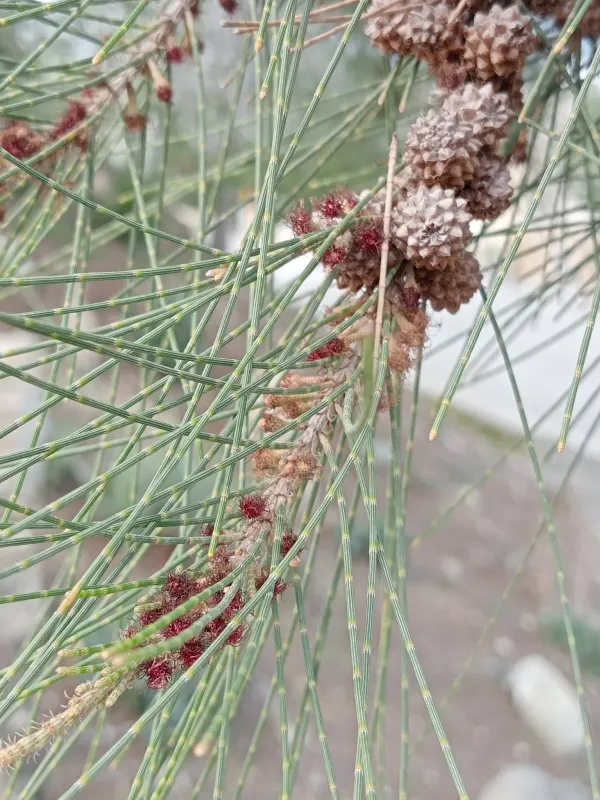
Description
Sowing dates
Propagation of Casuarina equisetifolia is typically achieved through seeds sown in specialized tree nurseries. Seed viability is generally high, though pre-sowing treatments, such as brief soaking, can improve germination uniformity.
The ideal time for sowing coincides with the onset of the wet season, ensuring that young seedlings have sufficient moisture to establish their root systems. In controlled greenhouse environments, sowing can occur year-round with precise moisture management.
Using containers for seedling development allows for the growth of a robust, compact root system, which significantly enhances survival rates upon field transplanting. Seedlings are usually ready for field deployment within 4 to 6 months of age.
Planting designs depend on the primary objective; for windbreaks, a dense row planting with 2 to 3 meters between trees is standard to encourage vertical growth and trunk straightness. Maintaining adequate spacing is essential to reduce early competition.
Before transplantation, the site should be cleared of aggressive weeds that might compete for nutrients. Adding a small amount of slow-release fertilizer at the bottom of the planting pit provides a vital boost for early establishment.
##requirements##Casuarina equisetifolia is a highly light-demanding species, thriving best in open, sunny locations where it receives full exposure throughout the day. Shading leads to stunted growth and loss of the characteristic straight-trunk form.
This species is exceptionally well-adapted to marginal soil types, including sandy, stony, or saline coastal soils. Its unique ability to fix atmospheric nitrogen through symbiosis with Frankia bacteria allows it to flourish in nutrient-deficient substrates.
The optimal pH range for this culture spans from slightly acidic to slightly alkaline conditions (pH 5.0–8.0). It is highly resistant to salt spray, making it a premier choice for coastal stabilization and wind erosion prevention.
A warm, tropical or subtropical climate is essential, as the species is intolerant of severe or prolonged frost. While it can withstand short cold snaps, sustained growth requires temperatures consistently above 15°C.
Water requirements fluctuate based on plant age; while seedlings need regular moisture to establish, mature trees exhibit remarkable drought tolerance once their deep, extensive root systems have penetrated the soil profile.
##yield##The productivity of Casuarina plantations is measured by biomass accumulation and timber quality. As a fast-growing species, it can reach harvestable sizes in as little as 7 to 15 years, depending on the management intensity.
Annual wood production can reach 15–20 cubic meters per hectare in managed stands. The timber is dense and durable, highly valued for construction, fencing, and as a superior source of fuel and charcoal.
In addition to timber, the species generates significant organic matter through leaf fall. This needle-like litter acts as a natural mulch, which is highly effective in suppressing weeds and enriching the soil with organic nutrients.
The crop also provides indirect economic yields through protection services. By reducing wind speed, Casuarina buffers protect sensitive agricultural fields from mechanical damage and erosion, thereby stabilizing regional crop yields.
The economic value of the biomass makes it a preferred choice for short-rotation forestry, allowing farmers to generate consistent revenue while rehabilitating degraded lands through nitrogen fixation.
##threats##The most significant threat to young plantations is fungal root rot, particularly in areas with poor drainage and waterlogging. Preventing stagnant water is the primary defense against these soil-borne pathogens.
Stem borers and various wood-boring beetles can cause extensive damage to mature trees by creating galleries inside the trunk, which significantly lowers the structural integrity and marketability of the timber.
Defoliating insects can occasionally cause outbreaks that severely reduce the tree's photosynthetic capacity. This is most common in dense, poorly ventilated stands where high humidity favors insect reproduction.
Integrated pest management, including regular tree inspection and thinning to ensure airflow, is crucial. Sanitation logging, where infected trees are removed promptly, prevents the spread of borers and fungal infections.
- Periodic monitoring of trunk health.
- Maintaining optimal spacing for air circulation.
- Application of fungicides in nursery settings.
Harvesting of Casuarina equisetifolia is a systematic process planned according to the desired timber dimension. The most favorable harvesting period is during the dry season to facilitate easier access and timber drying.
Felling is conducted using mechanized saws, ensuring directional felling to prevent damage to surrounding trees. After felling, logs are delimbed and processed into specific size grades based on the market requirements.
The high density and hardness of the wood require heavy-duty processing equipment. Efficient harvest logistics are key to minimizing costs and maximizing the high energy density potential of the timber.
Harvest residues, including thin branches and needles, are often shredded to serve as mulch on the plantation floor, ensuring the nutrient cycle remains intact for the next growth rotation.
Post-harvest management involves evaluating the soil state and determining whether to replant seedlings or rely on natural regeneration from stumps, ensuring long-term sustainability of the forestry site.
[SOURCE] https://www.fao.org/forestry/casuarina/en/