
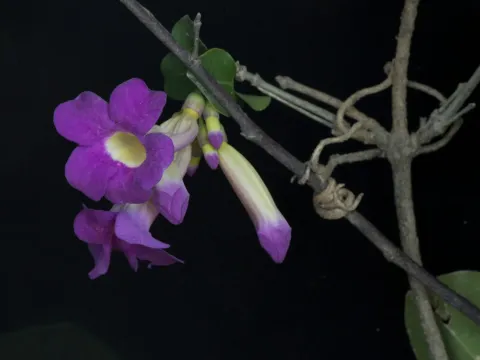
Mansoa hymenaea
Mansoa hymenaea
Propagation of this crop in commercial or horticultural settings is most frequently carried out via vegetative methods, specifically stem cuttings. The optimal time for taking semi-hardwood cuttings is during the period of active sap flow, which ensures high rooting success rates.
What the section contains
Mansoa hymenaea
Seed propagation is used less commonly due to the prolonged germination period and the necessity of maintaining constant substrate moisture. Seeds should be sown in a prepared, nutrient-rich potting mix at temperatures no lower than +22°C.
For successful rooting, it is recommended to use light, well-aerated media with the addition of perlite or vermiculite. Maintaining a stable temperature range and providing indirect light is crucial during the initial stages of development.
When transplanting young plants into open ground, it is essential to consider that the root system requires time to adapt to new soil conditions. Planting should be scheduled for when the risk of nocturnal frost has passed, as the species is highly sensitive to cold.
Adhering to correct spacing between plants in rows is a vital factor for preventing overcrowding of the vines. Typically, an interval of at least two meters is maintained to allow for full development of the canopy.
Mansoa hymenaea is a woody vine belonging to the Bignoniaceae family, naturally occurring in the tropical forests of South and Central America. The plant is well-known for its distinctive garlic-like aroma released when its leaves are crushed.
The culture has strict requirements regarding temperature, favoring zones without significant thermal fluctuations. For optimal vegetative growth and flowering, a stable temperature range between +20°C and +30°C is required.
Soil preferences for the plant include organic-rich, well-drained substrates with a neutral to slightly acidic pH. Waterlogging in the root zone is detrimental to the culture, making a high-quality drainage system mandatory.
The plants require high light levels; however, intense midday sun in arid regions may cause leaf scorch. The ideal placement is an environment with bright, diffused light or partial shade.
Agrotechnical practices involve regular but moderate watering. During the active growing season, consistent soil moisture must be maintained, whereas in winter, watering should be reduced to a minimum to avoid completely drying out the root ball.
Economic utilization of Mansoa hymenaea is focused on harvesting plant material rich in phytoncides and sulfur-containing compounds. Harvesting of the green biomass is performed throughout the growing season once the plant reaches a commercial size.
The foliage and bark of the vine are valued in the pharmaceutical industry for the production of anti-inflammatory and analgesic agents. Yield volumes are directly dependent on the intensity of fertilization and the age of the specimen.
Following pruning guidelines that stimulate the growth of new shoots significantly increases biomass production. Regular rejuvenation pruning is important, as older shoots gradually lose their vegetative productivity.
The yield level is strongly correlated with the total leaf area and the intensity of photosynthesis. In climate-controlled commercial greenhouses, biomass yield can be 30–40% higher than in extensive open-field cultivation.
Processing of the collected raw material requires immediate drying under controlled conditions. This is essential to preserve the volatile compounds that determine the pharmacological efficacy of the final product.
The primary pests affecting this culture in enclosed environments are spider mites and mealybugs. They reproduce rapidly under low air humidity and can quickly weaken the plant if left unmanaged.
Excessive watering combined with poor ventilation carries a high risk of root rot, often caused by fungal pathogens such as Fusarium. These diseases manifest through yellowing of the leaves and wilting of young shoots.
Powdery mildew can affect the foliage during periods of fluctuating air humidity. To combat this, modern systemic fungicides approved for ornamental or medicinal plant use should be applied.
Timely preventative measures, including regular ventilation of the planting site and the removal of infected plant parts, help reduce the reliance on chemical treatments. Disinfection of pruning tools between plants is also critical.
In open-field cultivation, the plant may be attacked by various species of aphids that damage developing inflorescences. Utilizing biological control methods, such as attracting beneficial entomophages, is the preferred approach for managing pest populations.
Medicinal raw material is harvested by hand, carefully trimming shoots with fully developed leaves. Using sharp, sanitized tools is imperative to minimize mechanical injury to the parent plant.
The optimal time for harvesting is during the early morning hours, when the concentration of active compounds in plant tissues is at its peak. This practice is essential for obtaining high-quality essential oil or pharmacological extracts.
Post-harvest, the material undergoes a mandatory sorting process to remove damaged or contaminated parts. This step is critical for ensuring high-quality standards and final product compliance.
Drying of the material is performed in well-ventilated, dark rooms at temperatures not exceeding +40°C. Exceeding this threshold results in the loss of aromatic compounds and a decrease in therapeutic properties.
Storage of the dried material is carried out in airtight containers, which prevent exposure to moisture and direct sunlight. Properly processed and stored material retains its active properties for 12 to 18 months.