
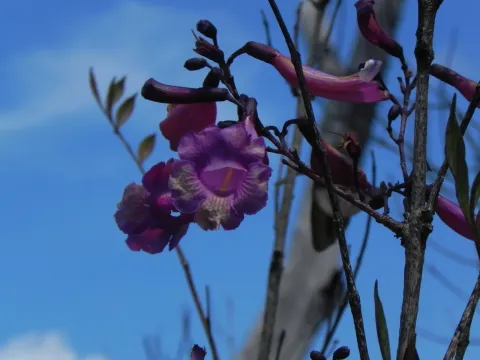
Jacaranda oxyphylla
Jacaranda oxyphylla
Propagation of Jacaranda oxyphylla is primarily conducted via seeds or semi-hardwood cuttings. Seeds should be sown in a well-draining, sterile potting mix immediately after harvest to maintain maximum viability.
What the section contains
Jacaranda oxyphylla
Optimal germination occurs at temperatures between 22 and 26 degrees Celsius. Seeds are typically sown at a depth of 1 cm, requiring consistent moisture and warmth for emergence within 4–6 weeks.
Seedlings are transferred to individual nursery pots once they reach the two-leaf stage. Using deep containers helps accommodate the plant's taproot system, which is crucial for subsequent field establishment.
For clonal propagation, cuttings should be taken during the active growing season. Applying rooting hormones and maintaining high humidity under mist systems increases success rates significantly.
Transplanting into the permanent site should be scheduled after the last frost. The soil should be amended with organic matter to support early root development and environmental adaptation.
Jacaranda oxyphylla is a notable species within the Bignoniaceae family, native to the tropical regions of South America. It thrives in full sun, requiring exposure to light for optimal bloom production.
Soil requirements involve well-drained, fertile substrates. While the plant can tolerate various soil types, it performs best in sandy loam with a neutral or slightly acidic pH level.
Climate adaptation is restricted to frost-free environments. The tree is sensitive to cold stress and requires protection from temperatures dropping below 5 degrees Celsius to prevent vegetative damage.
Water management is critical during the establishment phase and the blooming season. While mature trees exhibit moderate drought tolerance, adequate moisture ensures vigorous crown development.
Agricultural maintenance includes balanced fertilization applied at the start of the spring season. Pruning is recommended to maintain the structural integrity of the canopy and remove dead wood.
Common pests include whiteflies and scale insects that infest leaves and soft stem tissue. Integrated Pest Management (IPM) strategies, including biological control, are recommended for large-scale operations.
Root rot caused by Phytophthora species is a major threat in poorly drained soils. Improving soil aeration and adjusting irrigation schedules are the primary methods for preventing this pathology.
Spider mites can become a nuisance during hot, dry spells. Regular misting and the application of horticultural oils help maintain healthy foliage by deterring mite populations.
Powdery mildew may occur if the canopy is too dense, reducing airflow. Thinning out the branches and utilizing copper-based fungicides helps control fungal spread during humid seasons.
- Sanitary pruning of infected branches
- Monitoring soil moisture levels daily
- Proper spacing to allow canopy air circulation