
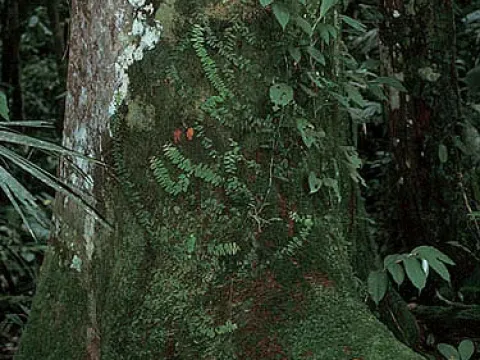
Brosimum parinarioides
Brosimum parinarioides
Brosimum parinarioides is a significant tropical tree species belonging to the Moraceae family. It is native to the rainforests of South America, primarily within the Amazon basin, where it thrives in humid and stable environments.
What the section contains
Brosimum parinarioides
The culture requires a tropical climate with high humidity and consistent rainfall throughout the year. It performs best in deep, well-drained alluvial soils that are rich in organic matter and nutrients, essential for the development of its root system.
Although it is a light-demanding species at maturity, young saplings often develop under the canopy of primary forests. This shade tolerance in the early stages of life is a crucial biological adaptation for survival in dense tropical environments.
The botanical structure of the tree is characterized by a sturdy, massive trunk and a high, spreading crown. Its root system is exceptionally deep, providing stability against severe tropical storms and maintaining the tree's health in competitive forest tiers.
Establishing this species in forestry plantations requires careful management of humidity levels and soil structure. Due to its slow growth rate, it is often prioritized in conservation and enrichment planting rather than short-rotation forestry.
The primary economic value of Brosimum parinarioides lies in its high-quality timber, globally traded as part of the masaranduba group. This wood is prized for its extreme density, durability, and natural resistance to decay and insects.
Harvesting strategies must adhere to sustainable forestry principles to prevent the depletion of natural stands. Because of the tree's long lifecycle, harvest cycles are measured in decades, necessitating precise long-term economic planning.
The timber is widely utilized in heavy-duty construction, marine engineering, and premium decking. Its physical properties make it an ideal choice for high-traffic environments where resistance to weathering is critical for infrastructure longevity.
Secondary uses include the extraction of latex from the tree’s tissues, which has historical applications in traditional practices. Modern research continues to evaluate the medicinal and industrial potential of its chemical constituents.
Commercial processing of the timber requires heavy-duty machinery due to its high density and hardness. Proper harvesting protocols also involve regional environmental monitoring to ensure the balance between timber production and ecosystem health.