
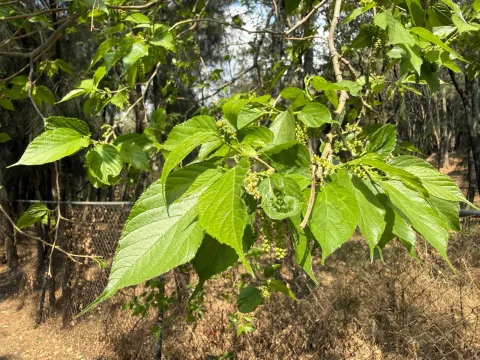
Celtis-leaved mulberry
Morus celtidifolia
Morus celtidifolia, commonly known as the celtis-leaved mulberry, is a member of the Moraceae family. It originates from the mountain forests of Mexico and Central America, thriving in high-altitude environments.
What the section contains
Celtis-leaved mulberry
The species requires well-drained, nutrient-rich soil to establish a deep root system. It thrives in locations that offer full sun exposure, which is critical for maximizing both fruit production and biomass accumulation.
Regarding climate, the plant prefers temperate conditions with moderate humidity levels. It has proven to be relatively resilient, but protection from harsh winter frosts is recommended in non-native cultivation zones.
Agrotechnical maintenance includes regular monitoring of soil pH and nutrient content. Supplemental watering is crucial during the establishment phase, especially during the dry seasons to prevent moisture stress.
In terms of agricultural use, this mulberry is valued for its rapid growth, making it a viable candidate for reforestation, fodder production, and as a source of edible fruit for local consumption.
Common pathological threats include fungal infections such as powdery mildew and bacterial blight, which can thrive in areas with poor airflow and excessive moisture levels.
Pest populations that frequently impact the health of Morus celtidifolia include spider mites and scale insects, both of which feed on the sap and can lead to chlorosis.
Integrated Pest Management (IPM) strategies are highly effective for this crop, emphasizing the use of beneficial insects and targeted biological agents to maintain plant health.
Regular canopy thinning is essential to reduce the humidity around the leaves, thereby significantly lowering the probability of fungal spore germination and disease spread.
Routine inspections of the trunk and underside of the leaves serve as the first line of defense to detect early signs of infestation and prevent large-scale damage to the tree.