
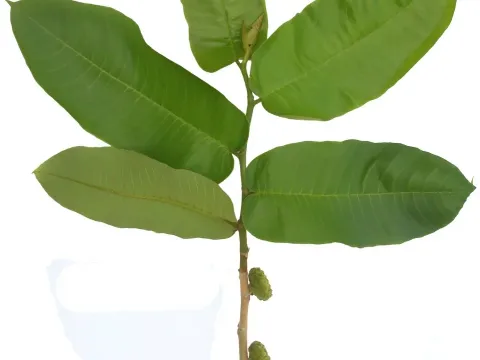
Castilla
Castilla
Propagation of Castilla is primarily carried out using seeds or cuttings within specialized nursery environments. Seeds lose their viability very quickly, so they must be sown immediately after collection while maintaining high substrate moisture.
What the section contains


Castilla
In its natural habitat, the optimal time for establishing plantations coincides with the start of the rainy season. This allows saplings to take root and adapt to soil conditions before the drought period sets in.
Light, well-draining soil mixtures protected from direct sunlight are used for germination. Regular irrigation is critically important during the first three months of a young plant's life.
Transplanting to the permanent site is performed when the seedling reaches a height of 40-60 cm. It is crucial to preserve the integrity of the root ball to avoid stress during the transition.
Planting density in plantations varies based on the intended use; a grid pattern of 5x5 or 6x6 meters is commonly used to ensure adequate access to sunlight.
Castilla is a typical member of the Moraceae family, requiring a hot and humid tropical climate. The plant is extremely sensitive to low temperatures and cannot withstand even brief frosts.
For active growth, the trees require deep, humus-rich, and well-draining soils. The crop does not tolerate waterlogging, so sites on gentle slopes are preferred for cultivation.
The optimal annual precipitation level for successful farming ranges between 2000 and 3000 mm, with consistent distribution. Prolonged drought periods negatively affect sap flow.
Light intensity plays a decisive role in latex accumulation, so plantations must remain open and free from excessive shading by other species.
The crop prefers slightly acidic or neutral soils. In industrial settings, it is essential to conduct regular acidity monitoring and apply organic fertilizers to maintain soil fertility.
The primary economic product is the milky sap (latex), which is extracted by making incisions in the tree trunk's bark. The collection process requires great care to avoid damaging the tree's cambium.
Yield depends on the age of the tree, the quality of genetic material, and the intensity of care. Usually, the productive period begins around 7-10 years of age.
Modern agronomic practices include stimulation of sap flow, which increases raw material output. However, excessive exploitation can exhaust the tree, making strict adherence to tapping schedules essential.
The quality of the obtained rubber depends directly on the collection season and the method of latex coagulation. Traditionally, acid agents derived from local plants were used.
Besides latex, Castilla wood can be utilized in local applications, although it is not a high-value timber and is prone to rapid decay if not treated correctly.
Phytopathogenic fungi pose a serious threat to plantations, especially when attacking the root system in waterlogged conditions, which can lead to wilting and death of young trees.
Leaf-eating insects and specific tropical bark pests can significantly slow down the growth of saplings. Regular trunk inspections are necessary to detect and mitigate infestation sites early.
Competition with fast-growing weeds during the first years is a critical threat to plantation development. Keeping the base of the tree clear is essential for survival.
Epiphytes and vines can envelop the crown, limiting light access and promoting rot in the bark. Regular trunk cleaning is a mandatory maintenance practice.
In regions with strong wind patterns, trees may suffer from windthrow due to their shallow root system, necessitating the establishment of windbreak belts.
Latex collection is conducted during dry weather, as rain can lead to premature coagulation or contamination of the raw material. Morning hours are optimal for tapping.
To extract latex, V-shaped or spiral incisions are made in the bark. The sap is collected in specialized containers hung from the trunk, ensuring it does not come into contact with the soil.
The frequency of tapping is established to allow the tree time to recover. Typically, incisions are refreshed every day or two, moving the tapping line lower down the trunk.
After collection, the latex undergoes primary processing, including filtration of impurities and coagulation. The cleanliness of equipment is vital for the quality of the final rubber product.
The final step involves washing and drying the rubber sheets before they are transported to processing plants for further vulcanization.