
Sedeveria Elegans
Echeveria elegans Rose. x Sedum morganianum E. Walther
Description
Growing requirements
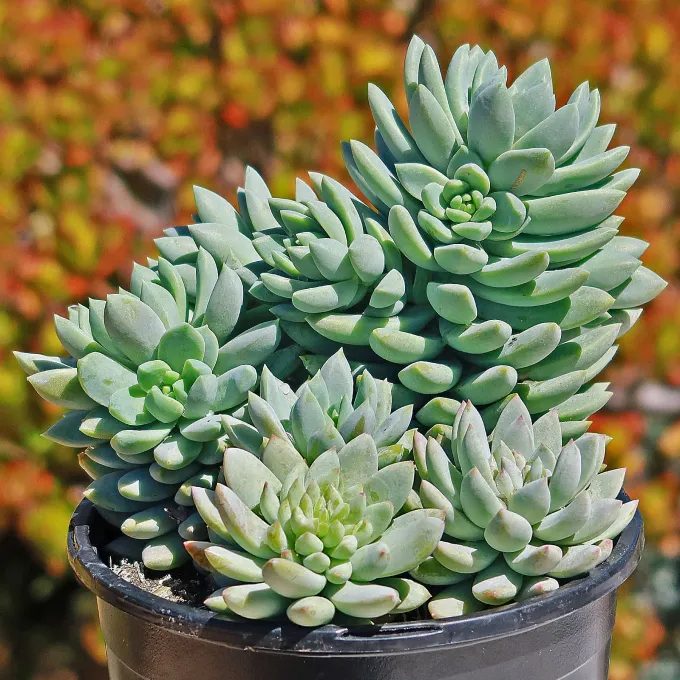
Sedeveria Elegans is a prized intergeneric hybrid belonging to the Crassulaceae family, resulting from the cross-breeding of Echeveria and Sedum species. It is characterized by its rosette-forming habit, featuring succulent leaves that exhibit excellent structural integrity and aesthetic appeal.
Native to the arid regions of Mexico, this plant has adapted to survive in environments with high solar radiation and sporadic rainfall. Its cultivation is popular worldwide, particularly in ornamental horticulture, where it is utilized both as a houseplant and a landscape element in frost-free climates.
The plant requires bright, filtered light to maintain its compact rosette form. Exposure to intense afternoon sunlight should be minimized to avoid foliar scorch, while extremely low-light conditions often result in poor growth and loss of the plant's characteristic symmetry.
Regarding substrate requirements, Sedeveria Elegans thrives in porous, fast-draining potting mixes. A standard mix should include pumice, perlite, and coarse sand mixed with organic matter to ensure that water does not accumulate around the root system, which is critical for plant longevity.
In terms of agricultural and commercial use, this species is a staple in the ornamental market. Its low maintenance requirements, combined with its popularity in trendy plant arrangements such as vertical succulent walls and miniature desktop gardens, make it a high-value product for nurseries.
Main diseases and pests
The most significant threat to this culture is root rot, typically caused by waterlogged soil and poor aeration. Pathogenic issues may arise if the plant is kept in high-humidity environments, while common pests include mealybugs that thrive in hidden areas of the dense succulent rosettes.