
Echeveria lilacina x Sedum suaveolens
Echeveria lilacina Kimnach & R. C. Moran x Sedum suaveolens Kimnach
Description
Growing requirements
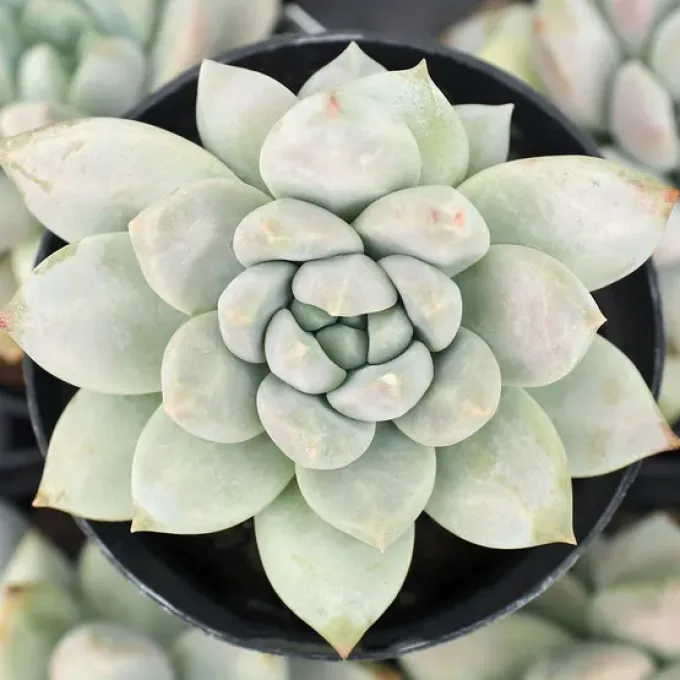
This intergeneric hybrid of the Crassulaceae family is highly valued for its elegant, symmetrical rosette structure and silvery-white foliage, which it inherits from its succulent parents.
The plant requires a high-light environment to thrive; however, direct sunlight in extremely hot climates may require partial shading to prevent leaf scorching during the peak of summer.
Optimal soil composition is critical for this crop. A porous, well-draining mineral substrate consisting of pumice, lava rock, and coarse sand ensures that the root system remains healthy and aerated.
Climatic conditions should mimic its natural Mexican habitat, characterized by warm days and cooler nights. During the winter months, a dry and cool dormancy period is essential to simulate natural seasonal changes.
Water management is the most important aspect of its agrotechnology. The "soak and dry" method is the industry standard: water thoroughly, then allow the medium to dehydrate completely before the next irrigation cycle.
Main diseases and pests
Root rot is the most devastating condition for this succulent, usually triggered by overwatering, poor drainage, or an overly organic potting mix that retains moisture for too long.
Mealybugs are the most common pests that infest these plants. They hide in the tight crevices between the leaves and are often protected by a waxy substance that makes eradication challenging.
Fungal leaf spot diseases can occur if the plant is exposed to overhead irrigation, which traps water between the fleshy leaves and leads to bacterial or fungal decay.
Aphids may occasionally attack the tender flower stalks, requiring careful inspection and prompt application of contact or systemic pesticides when necessary.
Regular sanitation, such as removing dead basal leaves and maintaining proper airflow, is the primary line of defense against both biotic and abiotic stressors in this crop.