
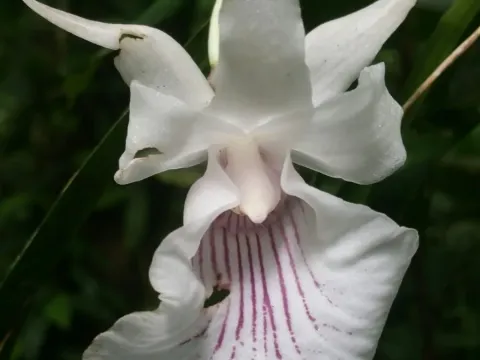
Warczewiczella
Warczewiczella
Warczewiczella is a genus of epiphytic herbaceous perennials belonging to the Orchidaceae family. These plants are native to the tropical rainforest regions of Central and South America, where they thrive in high-humidity environments.
What the section contains


Warczewiczella
Botanically, Warczewiczella species are characterized by a sympodial growth habit but notably lack pseudobulbs, which makes them more sensitive to environmental changes. They produce long, strap-like leaves arranged in dense, attractive rosettes that provide foliage interest throughout the year.
To cultivate this crop successfully, a stable temperature range between 20°C and 25°C is required. The plants are highly susceptible to cold drafts and sudden temperature fluctuations, which can trigger physiological stress and damage the delicate root system.
High relative humidity, ideally between 70% and 80%, is essential for the healthy growth of Warczewiczella. The growing medium must be highly porous and moisture-retentive, typically composed of conifer bark, perlite, and sphagnum moss to ensure proper aeration.
The primary use of Warczewiczella is in specialized ornamental floriculture and private horticultural collections. They are highly sought after by enthusiasts for their large, fragrant, and waxy-textured flowers that bring a unique aesthetic to indoor gardens.
The most common pests affecting Warczewiczella under cultivation include spider mites and scale insects, which often appear when air humidity is insufficient. Regular monitoring and the application of appropriate acaricides are necessary to keep infestations under control.
Root and crown rot are frequent issues caused by poor drainage or overwatering the substrate. Preventive measures include ensuring the pot has adequate drainage holes, using a high-quality substrate, and allowing the roots to slightly dry out between irrigation cycles.