
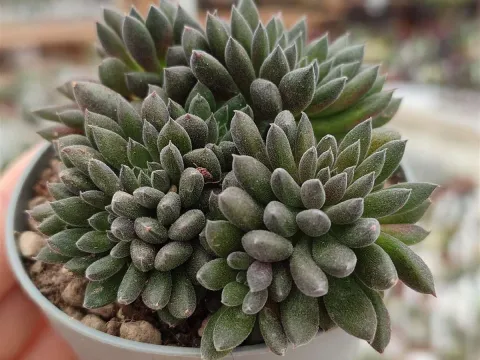
Sinocrassula
Sinocrassula
Sinocrassula is a genus of succulent plants within the Crassulaceae family, native to the high-altitude regions of China and the Himalayas. These plants are well-known for their unique, dense rosettes and dark, often purple-black foliage that adds visual contrast to any collection.
What the section contains


Sinocrassula
Successful cultivation of Sinocrassula requires a gritty, highly porous growing medium. A mix consisting of coarse sand, pumice, and minimal organic matter is essential to ensure excellent drainage, as the roots are highly susceptible to moisture-related stress.
Light requirements are significant for maintaining the plant's health and coloration. While they thrive in bright, indirect sunlight, they should be shielded from intense midday heat during the summer months to prevent foliage scorching.
Environmental conditions should mimic their native high-altitude habitat. They prefer cool to moderate temperatures and benefit from good air circulation, which prevents fungal buildup and ensures that the water in the substrate evaporates in a timely manner.
Watering protocols are strictly "soak and dry." It is vital to allow the soil to dry out completely between waterings to prevent root rot. During the winter dormancy, watering should be drastically reduced to maintain the plant's physiological stability.
The primary threats to Sinocrassula are root rot and crown rot, both caused by improper watering practices and poor drainage. Once these conditions set in, the plant loses its structural integrity and can succumb to rapid fungal decay.
Mealybugs are the most common insect pest. They tend to cluster in the tight crevices between leaves, making them difficult to detect early. Their feeding leads to stunted growth and the potential for secondary bacterial infections.
Spider mites can also be an issue, particularly in arid indoor environments where airflow is insufficient. These pests feed on the surface of the leaves, causing fine webbing and visible pitting, which ruins the aesthetic value of the succulent.
Management involves regular monitoring and the use of targeted insecticides or horticultural soaps. For fungal issues, moving the plant to a drier environment and applying localized fungicide treatments can sometimes save the specimen if caught early enough.
Cultural prevention remains the most effective control method. By maintaining clean growing conditions, using sterile substrates, and ensuring optimal environmental parameters, the risk of disease and pest infestation is significantly reduced.