
Sempervivum octopodes
Sempervivum octopodes
Description
Growing requirements
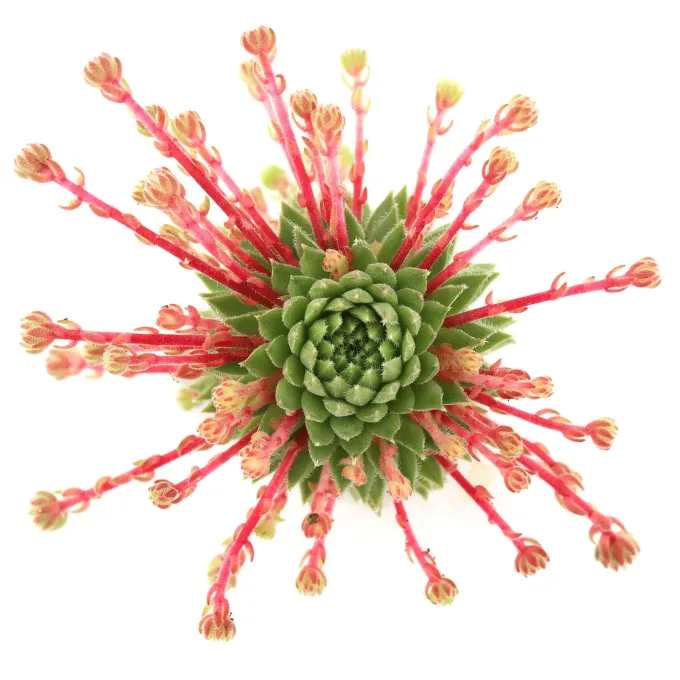
Sempervivum octopodes is a distinct perennial succulent species belonging to the Crassulaceae family. Native to the mountainous terrains of the Balkans, it is naturally adapted to thriving in harsh, rocky environments with minimal soil resources.
The plant is defined by its dense rosettes and its remarkable ability to propagate through long stolons, which spread horizontally. This creeping growth habit allows it to form dense, ground-covering mats, making it a highly desirable choice for xeriscaping and alpine gardens.
This species requires full sun exposure to maintain its compact rosette structure and vibrant color. In low-light conditions, the plants become etiolated and lose their characteristic geometric appearance, significantly decreasing their ornamental value.
Soil requirements for this succulent are specific: it demands excellent drainage. A gritty, mineral-rich substrate is ideal. When planting in containers or garden beds, it is essential to incorporate coarse sand or gravel to prevent root rot caused by stagnant water.
Sempervivum octopodes is exceptionally hardy and drought-resistant once established. It requires very little supplemental watering, even during the peak of summer. Excessive moisture is more detrimental to the plant's health than temporary dehydration.
Main diseases and pests
The primary threat to the vitality of Sempervivum octopodes is fungal infection caused by poor drainage and excessive humidity. When the soil remains wet for extended periods, the base of the rosettes begins to decay rapidly, often leading to the loss of entire clusters.
Pests such as mealybugs and aphids may occasionally infest the plants, particularly when they are kept in sheltered or crowded conditions. These insects target the soft tissue between the leaves, draining the plant's nutrients and causing stunted development.
To mitigate the risk of disease, gardeners should ensure adequate airflow around the rosettes. Avoiding dense planting patterns and keeping the area free of organic debris helps maintain the dry microclimate that these succulents prefer.
If an infestation occurs, targeted use of insecticides is recommended. It is crucial to apply these treatments during the cooler parts of the day and ensure that no liquid settles inside the rosettes, as this can lead to further tissue damage.
Regular maintenance involves checking for weeds that could harbor pests or create damp, shaded patches. By keeping the surrounding area clean and well-drained, the plant remains robust and resistant to most environmental stresses.