
Six-row stonecrop
Sedum sexangulare
Description
Growing requirements
Six-row stonecrop (Sedum sexangulare) is a perennial succulent plant belonging to the Crassulaceae family. It is native to much of Europe, where it thrives in sandy, rocky, and dry habitats, often found in open woodlands and on sunny hillsides.
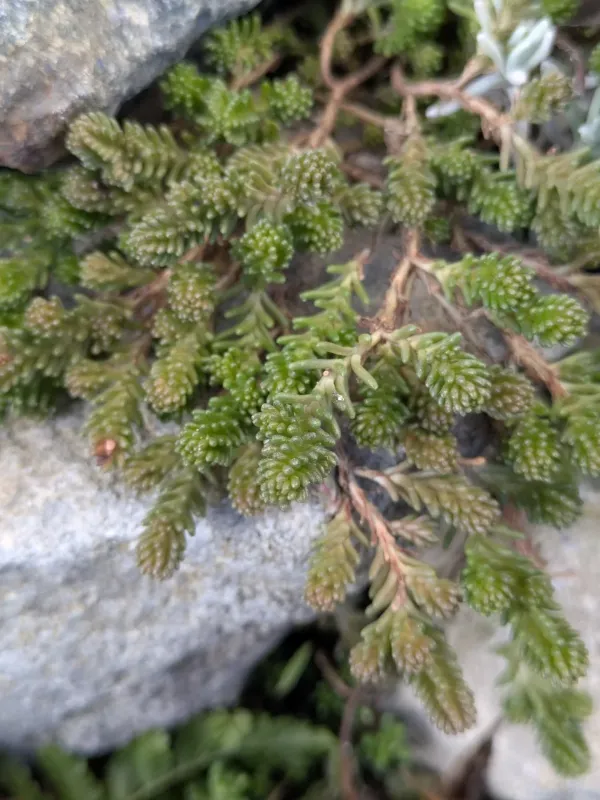
This species is highly valued in horticulture for its distinct structural form, featuring dense, cylindrical shoots that resemble tiny coniferous branches. It remains evergreen in many climates, providing visual interest throughout the winter season.
In terms of cultivation, it requires full sun exposure to maintain its compact growth habit and vibrant color. Plants grown in shade tend to lose their structural integrity and become prone to fungal issues due to poor air circulation.
The ideal soil for this stonecrop is poor, gritty, and well-drained. It does not require fertilization and, in fact, performs better in nutrient-deficient soils. Excessive organic matter or fertilizer can lead to weak, elongated growth.
As a landscape plant, it is used extensively for green roofing, rock gardens, and ground stabilization. Its ability to colonize dry areas makes it a sustainable choice for water-wise landscaping projects across temperate regions.
Main diseases and pests
The primary threats to Sedum sexangulare are related to moisture management. Root rot is a significant risk in poorly drained substrates, which quickly destroys the root system during cool, wet winters or spring seasons.
Insect pests are generally not a major concern; however, aphids may occasionally congregate on new, tender growth during the flowering period. Maintaining proper spacing and airflow usually prevents significant infestation levels.