
Sempervivum pittonii
Sempervivum pittonii
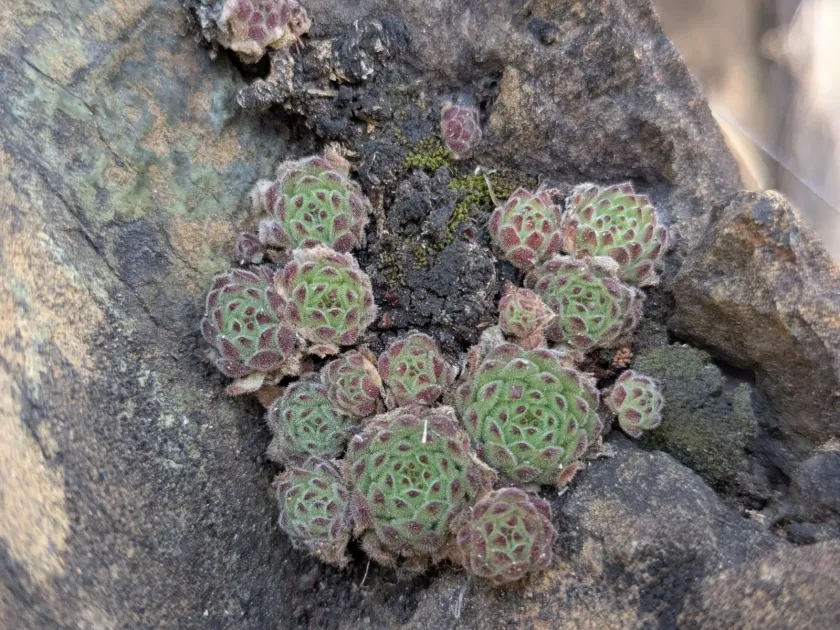
Description
Growing requirements
Sempervivum pittonii is a perennial succulent plant belonging to the Crassulaceae family. Native to the Eastern Alps, this species is highly specialized for growth in limestone-rich, rocky environments, showcasing a remarkable adaptation to mountainous climates.
The plant features distinct, hairy succulent rosettes that act as water storage organs. These leaves are covered in fine trichomes, which serve as an insulation layer, protecting the plant from both intense solar radiation and freezing alpine temperatures.
Cultivation requires a substrate that mimics its natural habitat: highly porous, mineral-rich, and alkaline. Sandy or gravelly soils are ideal, as they prevent water retention, which is the primary cause of plant failure in garden settings.
Exposure to full sunlight is essential for Sempervivum pittonii to maintain its characteristic compact form and vibrant leaf coloration. Insufficient light often results in etiolation, leading to weak rosettes that are more susceptible to physical damage.
Agricultural practices for this crop focus on minimal intervention. Occasional division of the offset rosettes in early summer allows for effective propagation and rejuvenation of the planting area without the need for chemical fertilizers.
Main diseases and pests
The most significant threat to the health of Sempervivum pittonii is fungal infection triggered by poor drainage or high ambient humidity. Root rot can quickly destroy the plant, making soil aeration the highest priority.
Pests such as slugs and snails represent a notable risk, as they are attracted to the succulent, moisture-rich foliage. Integrated pest management strategies, such as physical barriers, are preferred over broad-spectrum chemical controls.
Aphids may occasionally target the developing flower spikes, sucking sap and weakening the plant's reproduction potential. Monitoring the plants during the flowering phase allows for early intervention, such as localized soap-based treatments.
Overcrowded plantings often suffer from poor air circulation, which fosters the development of mold and mildew. Maintaining appropriate spacing between individuals is a crucial preventive measure for long-term plant health.
Regular maintenance, including the removal of dead lower leaves, helps prevent debris buildup that could harbor pests or trap moisture. This simple hygiene practice ensures the longevity and vitality of the rock garden display.