
Mountain stonecrop
Petrosedum montanum
Description
Growing requirements
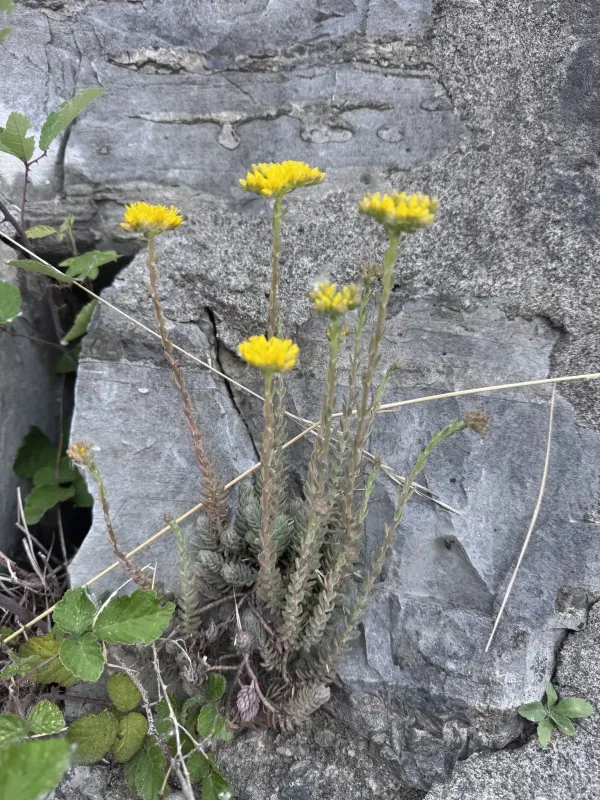
Mountain stonecrop (Petrosedum montanum) belongs to the Crassulaceae family. It is a perennial herbaceous succulent plant noted for its high adaptability to extreme growing conditions.
The natural range of the crop covers mountainous regions of Europe, where the plant thrives on stony slopes, cliffs, and dry meadows. In cultivation, the species demonstrates exceptional resistance to drought and direct sunlight.
The plant prefers well-drained, nutrient-poor soils with a neutral or slightly alkaline pH. Heavy clay soils that retain moisture are detrimental to the root system; therefore, ensuring a high-quality drainage layer during planting is essential.
For optimal development, mountain stonecrop requires open, sunny locations. In shaded conditions, the stems tend to become leggy, losing their decorative rosette density and exhibiting a reduced flowering rate.
The culture possesses high winter hardiness and can withstand significant temperature fluctuations, making it a promising candidate for landscape design in temperate climate zones.
Main diseases and pests
Major threats to the crop are associated with improper moisture management and water stagnation in the soil, which leads to the development of root and stem rots of various etiologies.
In high humidity conditions, fungal leaf spots may occur, necessitating treatment with systemic fungicides to prevent the spread of infection throughout the plant clump.
Among pests, aphids and mealybugs are the most common, as they feed on the sap of young shoots. To control these insects, it is recommended to use contact or systemic insecticides.
Occasionally, plantings may be damaged by slugs and snails, especially during rainy seasons. Mechanical barriers or specialized metaldehyde-based preparations are used to protect the plants.
A key aspect of disease prevention is adherence to agrotechnical standards: avoiding overwatering and ensuring adequate air circulation around the plant colonies.