
Orostachys japonica
Orostachys japonica (Maxim.) A. Berger
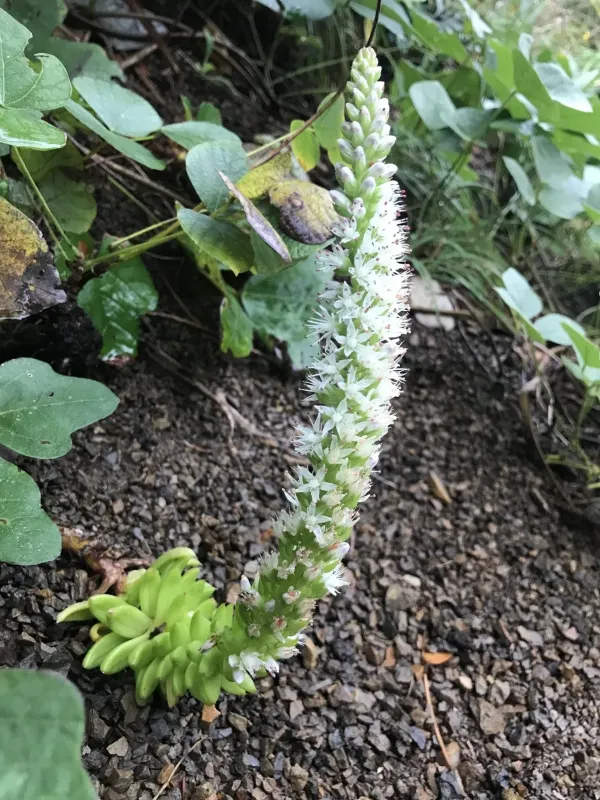
Description
Growing requirements
Orostachys japonica, commonly known as rock lotus, is a succulent plant belonging to the Crassulaceae family. It is native to rocky outcrops and cliffs in East Asia, exhibiting a high degree of adaptation to harsh, stony environments.
The culture thrives in well-drained, porous, and nutrient-poor soils. It is essential to ensure that the substrate mimics its natural habitat, with high mineral content and excellent water percolation to avoid root rot.
The plant requires full sun exposure to maintain its characteristic rosette shape. In environments with inadequate sunlight, the rosettes become elongated and lose their aesthetic and structural integrity.
Regarding climate, Orostachys japonica is cold-hardy, capable of surviving sub-zero temperatures typical of its native mountainous regions. However, it requires a dry environment during the dormant winter season.
Economically, the plant is primarily used in traditional medicine for its anti-inflammatory and antioxidant properties, and as an ornamental choice for xeriscaping and alpine gardens due to its minimal water needs.
Main diseases and pests
The most significant threats to Orostachys japonica are fungal pathogens, particularly root and stem rots caused by over-irrigation or excessive humidity in the growing medium.
Pest infestations, including mealybugs and aphids, are common problems. These insects settle deep within the tight rosettes, making them difficult to detect until the plant's growth begins to show signs of stress.
Spider mites can also be problematic in warmer, dry conditions or when the plant is kept in restricted, poorly ventilated areas. Regular monitoring of the underside of leaves is recommended.
Environmental stress, such as prolonged high humidity, significantly increases susceptibility to leaf spot diseases. Ensuring adequate air circulation around the plants is a critical preventive measure.
Integrated pest management strategies focusing on physical removal of pests and strict regulation of watering regimes are the most effective ways to maintain a healthy population.