
Cremnophila nutans
Cremnophila nutans
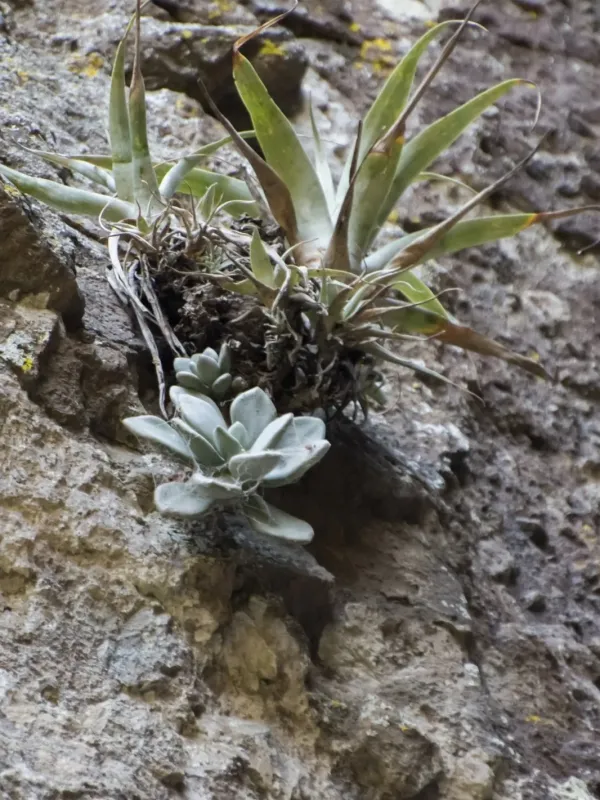
Description
Growing requirements
Cremnophila nutans belongs to the Crassulaceae family and is a distinctive succulent native to the rocky landscapes of Mexico. Its evolutionary history is tied to cliff-dwelling, which has shaped its physiology to survive in minimal, well-draining mineral substrates.
Successful cultivation requires a porous potting medium. A mix of pumice, coarse sand, and a small amount of organic compost is recommended to ensure rapid drainage. Stagnant water is the primary cause of failure when growing this species in a domestic or nursery setting.
Regarding light requirements, this plant thrives in bright, indirect light or full sun if acclimated properly. Direct midday sun in very hot climates may scorch the leaves, so careful positioning is necessary to maintain the rosette's compact and healthy form.
The climate requirements include a distinct seasonal cycle. During the growing season, warmer temperatures are preferred, while a cool and dry winter dormant period is essential to prevent etiolation and to encourage the production of its unique nodding flowers.
Watering should be approached with caution. It is best to wait until the soil is completely dry before adding more water. During the dormant winter phase, watering should be reduced to a bare minimum, just enough to keep the leaves from shriveling.
Main diseases and pests
The most significant threat to Cremnophila nutans is root rot caused by overwatering or poorly aerated soil. When the roots remain damp for too long, they lose the ability to transport nutrients, leading to rapid tissue death.
Mealybugs are the most common pests affecting this plant. They prefer the protected crevices between the succulent leaves, where they feed on plant sap and secrete a sticky substance that can attract secondary fungal infections.
Spider mites can also be problematic in low-humidity environments. They cause stippling and discoloration of the leaf surfaces, which significantly diminishes the aesthetic and physiological vitality of the plant.
Effective pest management involves regular inspections and the application of appropriate systemic insecticides if an infestation is detected. Physical removal with an alcohol-soaked swab can be effective for early-stage mealybug outbreaks.
To ensure long-term health, growers should maintain adequate air circulation around the plants. Good ventilation helps to dry the soil surface quickly and prevents the buildup of humidity that favors the development of mold and pathogens.