
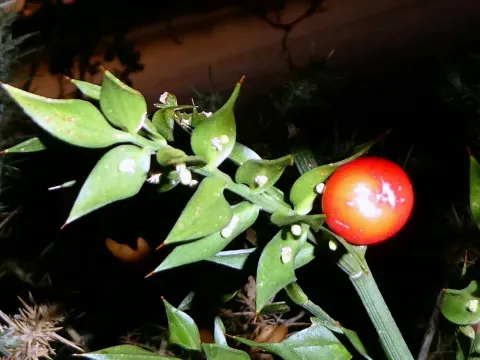
Ruscus
Ruscus L.
Ruscus, commonly known as butcher's broom, is a genus of evergreen perennial subshrubs belonging to the Asparagaceae family. The plant is botanically unique because its true leaves are reduced to tiny scales, while its photosynthetic functions are performed by flattened stem structures known as cladodes.
What the section contains


Ruscus
Native to the Mediterranean region, the Caucasus, and parts of Western Europe, this crop is well-adapted to subtropical and temperate climates. In agricultural practice, it is highly valued for its extreme hardiness and its ability to thrive in shaded environments where few other plants can survive.
Ruscus prefers well-draining, slightly acidic to neutral soil rich in organic matter. Waterlogging is the most common cause of crop failure, as the root systems are prone to rotting in stagnant moisture; therefore, fields must be carefully leveled and prepared with adequate drainage.
The climate requirements for optimal growth include mild winters and moderate humidity. While the plant can tolerate significant shade, excessive exposure to direct sun can lead to chlorosis or burning of the cladodes, reducing the market value of the crop in floriculture.
Agrotechnical maintenance involves consistent but sparing irrigation and occasional mulching to maintain soil structure. As a slow-growing crop, Ruscus does not require high nitrogen fertilization; instead, controlled-release fertilizers are preferred to ensure steady and healthy development of the rhizomes.
The primary threats to Ruscus plantations are soil-borne fungal pathogens such as Pythium and Phytophthora, which flourish in poorly drained soils. Furthermore, leaf spot diseases can occur during prolonged periods of high humidity, necessitating frequent monitoring and cultural control measures.
Insect pests include scale insects and mealybugs, which are often difficult to detect due to the leathery nature of the cladodes. In greenhouses, spider mites can become a major issue during dry spells, requiring the application of integrated pest management strategies to avoid chemical residue.
Ruscus is primarily grown for the floral industry, where its long-lasting, deep green cladodes are prized as essential foliage for professional arrangements. The plant's ability to remain fresh for weeks after being cut makes it a staple crop for international flower markets.
In addition to its ornamental value, Ruscus is a significant medicinal crop. The rhizomes contain steroidal saponins, specifically ruscogenin and neoruscogenin, which are widely extracted for the pharmaceutical industry to create effective treatments for venous insufficiency and related conditions.
Harvesting for medicinal purposes takes place in the autumn. The rhizomes are carefully unearthed, cleaned of dirt, and subjected to a drying process that preserves the active chemical components. High standards in drying ensure the efficacy and market value of the raw herbal material.
For floral use, the harvest is performed throughout the growing season by selecting fully mature stems. Proper cutting techniques are vital to preserve the vitality of the parent plant, ensuring that the plantation remains productive for several years or even decades.
Post-harvest handling involves careful grading, bunching, and cooling. Maintaining a cold chain is crucial for the floral product, as it significantly extends the vase life of the greenery, ensuring that the consumer receives a high-quality, durable product that meets market expectations.