
Ruscus hypophyllum
Ruscus hypophyllum L.
Description
Growing requirements
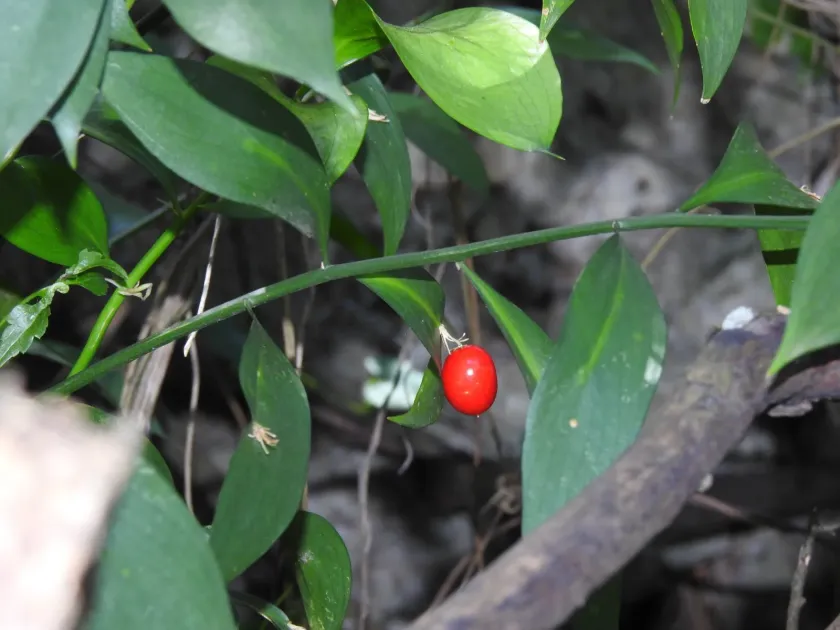
Ruscus hypophyllum, commonly known as butcher's broom, belongs to the Asparagaceae family. This evergreen shrub is native to the Mediterranean region and is prized for its long-lasting, glossy foliage used in floral arrangements.
The plant features cladodes, which are flattened leaf-like stems that act as leaves. Small flowers appear in the center of these structures, often followed by bright red berries if the conditions are favorable for pollination.
It thrives in shaded or semi-shaded environments, making it an excellent candidate for under-canopy planting in temperate gardens. It is not cold-hardy in freezing regions and usually requires greenhouse protection.
Well-drained soil is critical for its survival. The plant prefers slightly acidic to neutral soil and is sensitive to waterlogged conditions which may induce root rot and stunted growth.
In terms of agricultural practice, it is a slow-growing plant. Propagation is typically achieved by division of the rhizome in early spring, ensuring that each segment has at least one strong bud.
Main diseases and pests
Scale insects are the most common pests encountered in the cultivation of Ruscus hypophyllum, often clustering on the underside of the cladodes and along the stems.
Spider mites can also be a significant issue in low-humidity environments, leading to unsightly yellow spotting and the eventual loss of the plant's characteristic shine.
Mealybugs tend to hide in the joints of the stems, making them difficult to detect until a significant infestation has already damaged the plant tissue.
Root rot caused by pathogenic fungi like Phytophthora remains the primary physiological threat, usually appearing after periods of excessive rainfall or poor irrigation management.
Integrated pest management strategies, focusing on biological controls and strict sanitation protocols, are recommended to maintain high-quality commercial yields.
Harvesting
The harvesting of Ruscus hypophyllum for the cut flower industry involves selecting mature, deep green cladodes that have fully developed their structural integrity.
Harvesters typically use sharp, disinfected shears to cut the stems near the base, taking care not to damage the emerging new growth or the primary rhizome structure.
Post-harvest treatment is crucial for longevity; stems are often kept in a cool, dark environment to maintain hydration before being transported to flower markets.
Harvesting should not exceed one-third of the total foliage of an individual plant at any single time to ensure the plant maintains enough energy for subsequent growth cycles.
Properly handled stems of Ruscus hypophyllum are highly valued in floristry because they can remain fresh for several weeks when kept in water, making them a staple in professional design.