
Butcher's broom
Ruscus aculeatus L.
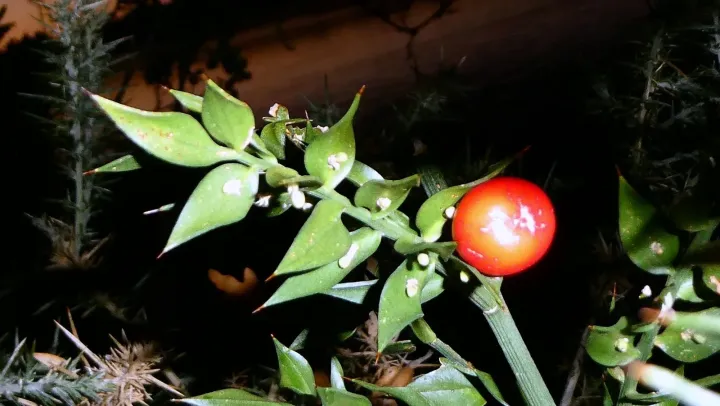
Description
Sowing dates
Butcher's broom is a slow-growing, evergreen perennial that is primarily propagated through rhizome division. While seed propagation is possible, it is lengthy due to a prolonged dormancy period that requires consistent stratification.
For commercial cultivation, rhizome division is the preferred method performed in early spring. This ensures that new plants establish themselves efficiently before the peak summer heat arrives.
Plants should be spaced approximately 40–50 cm apart to allow for the robust development of their extensive root systems. Crowding must be avoided to ensure proper air circulation throughout the plantation.
During the initial phase of development, young plants benefit from partial shade. This mimicry of their natural woodland habitat prevents stress and promotes healthier early-stage growth.
Soil preparation involves adding organic matter to improve drainage and aeration. Given the species' long life cycle, investing in proper soil structure at the time of planting is crucial for long-term success.
Growing requirements
The plant belongs to the Asparagaceae family and thrives in shaded or semi-shaded environments. Excessively bright, direct sunlight can damage the phylloclades, causing discoloration and reduced vitality.
It prefers well-drained, slightly acidic to neutral soils. It is notably sensitive to waterlogged conditions, which can lead to rapid decay of the underground rhizomes, its most valuable component.
Once established, Butcher's broom shows remarkable drought tolerance. However, providing adequate moisture during the growing season significantly improves the overall yield of the biomass.
Temperature resilience is moderate. While the plant can tolerate light frosts, it requires protection in colder climates to prevent damage to the aerial parts, which are vital for plant health.
Fertilization should be balanced, focusing on nutrients that support both root development and general foliage health. Over-fertilization, especially with nitrogen, should be avoided to prevent weak growth.
Yield
The primary economic value of Ruscus aculeatus lies in its rhizomes, which are rich in steroidal saponins. These compounds are highly sought after by the pharmaceutical industry for their venotonic properties.
Harvesting for medicinal use generally begins 4 to 5 years after the initial planting. This period allows the rhizomes to reach maturity and develop the necessary concentration of active substances.
The potential yield depends heavily on site selection and the consistency of agricultural management. Properly managed plantations can remain productive for over a decade with sustainable harvesting practices.
Beyond its pharmaceutical uses, the plant is a staple in the decorative greenery industry. Its durable branches are prized by florists for their longevity and unique structural aesthetic in bouquets.
Maximizing yield requires a balance between harvesting the rhizomes and maintaining enough of the plant population to ensure natural regeneration and the ongoing health of the plot.
Main diseases and pests
Ruscus aculeatus is naturally resistant to many common pests, though moisture management is essential to prevent root and crown rot caused by pathogenic fungi in damp conditions.
Scale insects and mealybugs are the primary threats. These pests target the phylloclades, potentially stunting growth and weakening the plant's overall vigor if left unmonitored.
- Regular field patrols to identify pest outbreaks early.
- Maintaining optimal moisture levels to avoid fungus proliferation.
- Use of integrated pest management (IPM) to reduce reliance on chemical sprays.
- Clearing debris and weeds from around the base of the plants to improve airflow.
- Sanitizing pruning tools between different plantation blocks to prevent cross-contamination.
Fungal control can be managed through the application of copper-based fungicides if the plantation is situated in high-humidity regions where rot is a recurring challenge.
By emphasizing preventive care and robust site selection, growers can minimize the need for external inputs, resulting in a cleaner, higher-quality medicinal product.
Harvesting
Harvesting is traditionally conducted in the autumn. During this time, the plant's metabolic activity slows down, allowing the concentration of therapeutic saponins in the roots to reach its peak.
The process involves carefully digging up the rhizomes, removing soil and debris, and washing the roots thoroughly in cold water to ensure a clean, raw material input.
Drying is a critical step; rhizomes must be sliced into smaller pieces and dehydrated in controlled conditions, keeping temperatures below 45°C to avoid degrading the active chemical components.
Once dried to the correct moisture content, the product is milled to the specified size and stored in a moisture-free environment to maintain its potency for commercial distribution.
Quality assurance at the harvest stage includes testing for moisture levels and active ingredient concentrations, ensuring that the harvested batch meets the rigorous standards of pharmaceutical buyers.