
Merwilla plumbea
Merwilla plumbea (Lindl.) Speta
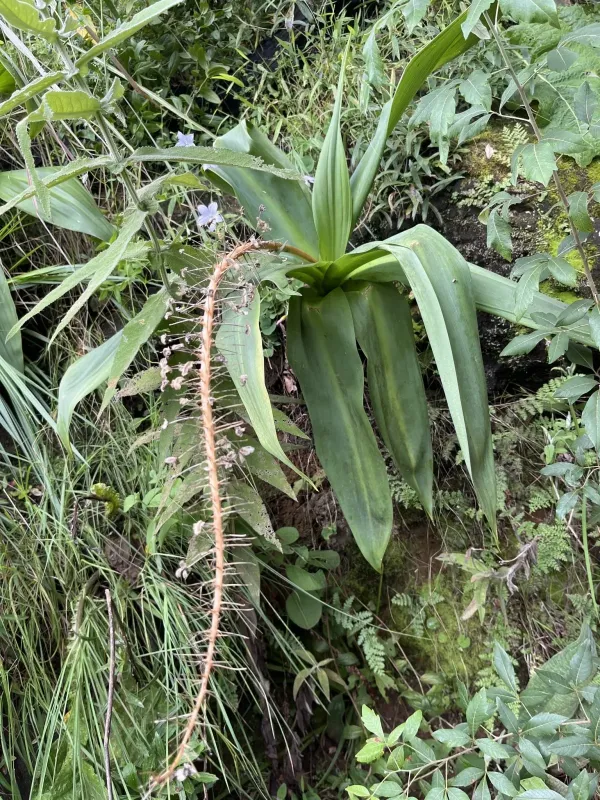
Description
Growing requirements
Merwilla plumbea, formerly classified under the Scilla genus, belongs to the Asparagaceae family. This bulbous perennial is native to the diverse landscapes of South Africa, where it thrives in grasslands and rocky outcrops under seasonal climatic conditions.
The plant requires well-draining, nutrient-rich soil to prevent root rot, which is a major concern for all bulbous species. A mixture of loam, sand, and organic compost provides the ideal growing medium for healthy bulb development.
It prefers full sun to light shade, making it a versatile plant for various garden settings. Exposure to direct sunlight is particularly important during the active growing phase to support photosynthesis and flower spike formation.
Watering management is crucial; the soil should remain moist but not saturated during the growing season. Following the flowering period, the plant enters a dormant phase where irrigation should be significantly reduced or ceased.
Temperature requirements are moderate; the plant is not frost-hardy and should be kept in environments above 10 degrees Celsius. In colder regions, containers should be moved indoors to protect the bulbs from freezing temperatures.
Main diseases and pests
The primary threats to Merwilla plumbea are soil-borne pathogens, specifically fungi that cause bulb rot and basal plate decay. Over-watering is the leading cause of these infections, especially in poorly aerated soils.
In terms of pests, spider mites are a common nuisance, particularly in dry and warm greenhouse conditions. These pests feed on the sap of the leaves, causing stippling and eventual leaf necrosis if left untreated.
Mealybugs may also infest the base of the leaves or the bulb neck. These insects secrete a waxy substance that protects them from external contact, making them somewhat difficult to eradicate once an infestation is established.
Snails and slugs are notorious for damaging tender foliage. Implementing physical barriers or using organic baits can help manage these populations without harming the surrounding beneficial garden ecosystem.
Routine sanitation, including the removal of dead leaves and the use of sterilized tools, significantly reduces the risk of disease spread. If chemical intervention is necessary, apply systemic fungicides or insecticides specifically labeled for ornamental bulbs.