
Harriman's Yucca
Yucca harrimaniae
Description
Growing requirements
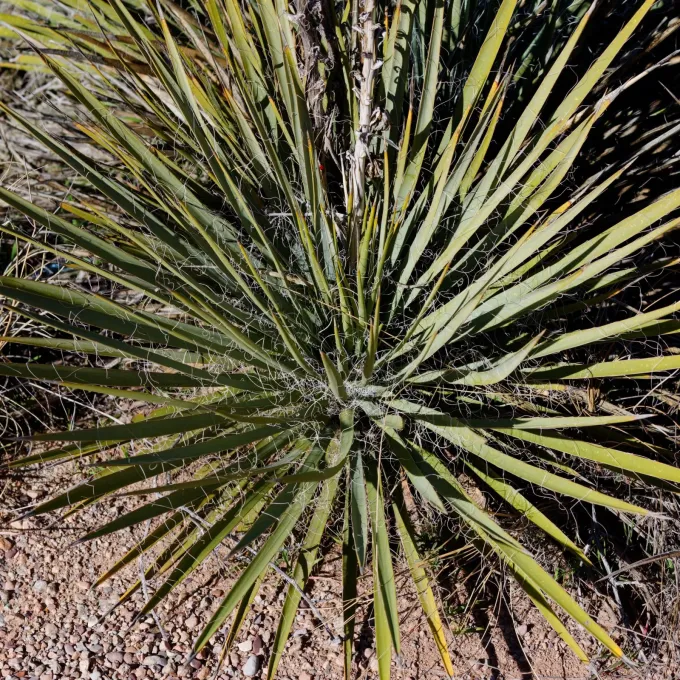
Harriman's Yucca (Yucca harrimaniae) is a perennial succulent species within the Asparagaceae family. It is a slow-growing, stemless plant characterized by a dense rosette of narrow, rigid leaves that often feature sharp, terminal spines.
Native to the arid regions of the southwestern United States, including Utah, Colorado, and Arizona, this plant thrives in desert scrub, pinyon-juniper woodlands, and rocky slopes. It has evolved to survive in nutrient-poor, well-draining soils with minimal rainfall.
Successful cultivation of Yucca harrimaniae depends heavily on replicating its native growing conditions. It requires extremely porous, gritty soil mixtures that prevent any moisture accumulation around the root crown, as standing water is fatal to this species.
As a heliophilic plant, it demands full sun exposure throughout the day. Inadequate light results in etiolation, where leaves become thin, weak, and elongated, severely reducing the plant's overall resilience and aesthetic appearance.
The plant is highly frost-tolerant and adapted to alpine desert climates with cold winters. However, the combination of cold temperatures and high humidity is the greatest risk factor for overwintering, necessitating dry conditions during the dormant season.
Main diseases and pests
The most significant threat to Harriman's Yucca is root and crown rot, primarily induced by overwatering or poor soil drainage. These fungal infections, often caused by Phytophthora species, can quickly destroy the plant from the base upwards.
Pests such as spider mites and mealybugs are frequently observed on this species. They hide in the tight clusters of the leaf rosette, making early detection difficult and manual or chemical intervention mandatory for control.
Weevils can also pose a serious threat, as their larvae bore into the core of the plant, causing collapse of the rosette. Monitoring for entry holes at the base of the leaves is a critical step in integrated pest management.
Fungal leaf spot diseases can occur during humid summers. To mitigate this, it is essential to ensure good airflow around the plant and avoid overhead watering that leaves moisture trapped in the center of the rosette.
- Regular inspection of the plant base for signs of decay.
- Application of specialized systemic insecticides for persistent mealybug infestations.
- Avoidance of organic mulches that retain moisture near the crown.