
Hesperocallis undulata
Hesperocallis undulata
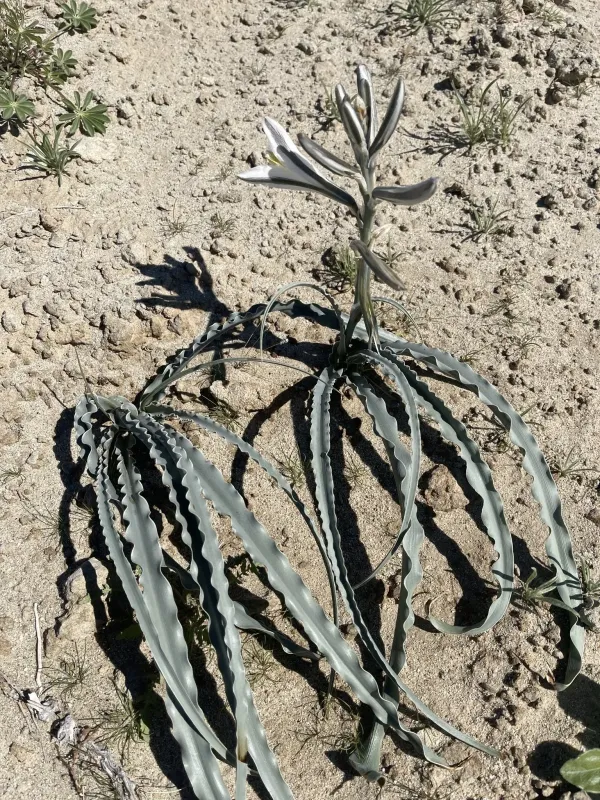
Description
Growing requirements
Hesperocallis undulata, commonly known as the desert lily, is a perennial bulbous plant belonging to the Asparagaceae family. This species is native to the arid desert landscapes of the Southwestern United States and Northwestern Mexico.
The plant thrives in extreme conditions, requiring full sun exposure and sandy, exceptionally well-drained soils. Its evolutionary design allows it to withstand severe drought by entering a dormant state during the hottest and driest months of the year.
Botanical features include a large, edible bulb protected by fibrous tunics and a basal rosette of glaucous leaves with wavy margins. The plant sends up a tall, striking inflorescence that can produce numerous fragrant, white, trumpet-shaped flowers.
Cultivation requires careful management of irrigation. Soil must have high permeability to prevent stagnant water, which is the primary cause of bulb failure in non-native environments. The plant responds vigorously to occasional heavy rainfall after a long dry period.
While primarily of botanical and aesthetic interest, the desert lily has been historically gathered by indigenous populations for its nutritive bulb. Today, it serves as a specialized crop for xeriscaping and arid-climate botanical collections.
Main diseases and pests
The most significant threat to Hesperocallis undulata is root rot induced by improper irrigation management. Soils that hold moisture for extended periods create an environment conducive to various soil-borne pathogens.
Herbivory presents a major challenge, as jackrabbits, desert rodents, and gophers frequently target the succulent leaves and developing flower stalks. Protecting emerging growth is essential in areas with high wild animal populations.
Insects such as bulb mites or onion maggots may infest the bulbs if the soil structure is not sufficiently loose or if the plant's natural defense mechanisms are weakened by external environmental stress.
Competition from invasive plant species is a persistent issue. Fast-growing annual weeds can quickly outcompete young desert lily seedlings for limited soil moisture and available nutrients in the surface layer.
Human development and soil disturbance in natural habitats pose an existential threat to wild populations. Because the bulb is deep-seated and sensitive, mechanical damage to the soil structure often results in the immediate mortality of the individual plant.