
Eremospatha macrocarpa
Eremospatha macrocarpa
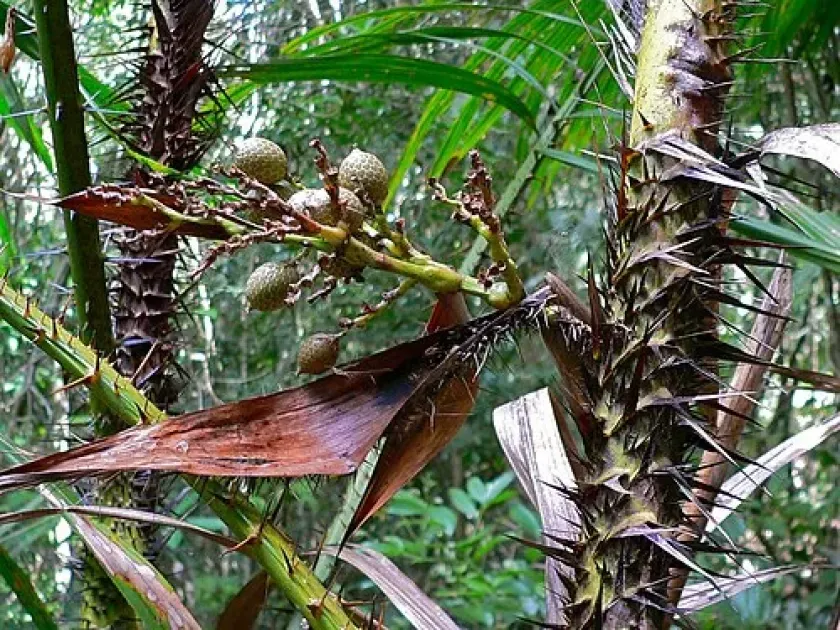
Description
Growing requirements
Eremospatha macrocarpa is a significant species within the Arecaceae family, commonly recognized as a source of high-quality rattan in West and Central Africa.
This species is native to humid tropical rainforests, thriving in environments characterized by consistently high temperatures and abundant rainfall throughout the year.
The plant requires deep, well-draining, and nutrient-rich soils to support its rapid growth rate and development as a high-climbing liana.
As a climbing palm, it relies heavily on host trees for structural support, using specialized barbs and thorns to ascend towards the forest canopy.
Sensitivity to microclimate changes means the species performs best in protected forest areas where ambient humidity remains high at all times.
Main diseases and pests
The survival of Eremospatha macrocarpa is threatened by large-scale deforestation and the conversion of tropical forest land into agricultural plots.
Unsustainable extraction practices continue to deplete natural wild populations, often leaving insufficient plants for natural regeneration in the wild.
Fungal infections are a significant concern, especially when harvested material is not stored under conditions that ensure proper ventilation and dryness.
Various wood-boring insects represent a biological threat, as they can hollow out the stems, rendering the raw material useless for furniture manufacturing.
Ecosystem degradation and the fragmentation of natural habitats limit the reproductive success and seed dispersal of this important palm species.
Harvesting
The primary economic value of Eremospatha macrocarpa lies in its flexible and durable stems, which are a cornerstone of the regional cane-weaving industry.
Harvesting involves carefully extracting the stems from the forest vegetation, followed by the removal of sharp, protective leaf sheaths and outer layers.
Post-harvest processing is crucial and typically involves thorough drying to ensure the material gains the necessary rigidity and resistance to pests.
The harvested stems are widely used for crafting high-end furniture, baskets, and intricate decorative items that are valued for their strength and flexibility.
In addition to industrial uses, various parts of the palm are utilized by local communities for their reported medicinal properties and traditional craftsmanship.