
Eleiodoxa
Eleiodoxa conferta
Description
Growing requirements
Eleiodoxa (Eleiodoxa conferta) belongs to the Arecaceae family and is a unique palm species native to the tropical rainforests and peat swamps of Southeast Asia, including regions in Malaysia and Thailand. It is a cluster-forming, evergreen plant adapted to life in high-moisture environments.
The plant thrives in equatorial climates characterized by high humidity, abundant rainfall, and consistently warm temperatures. Unlike many other palm species that require well-drained soil, Eleiodoxa is a true hydrophytic plant, capable of growing in waterlogged substrates for extended periods.
Botanically, it is characterized by a clumping growth habit, where multiple stems emerge from a common rootstock. The leaves are large, pinnate, and armed with sharp spines on the petioles, which serve as a natural defense mechanism against herbivores in the dense swamp habitat.
Optimal growth requires organic-rich, muddy soils with a high water table. The plant is well-adapted to anaerobic soil conditions found in swamps, making it a critical component of its native ecosystem, contributing to the biodiversity of mangrove and freshwater swamp forests.
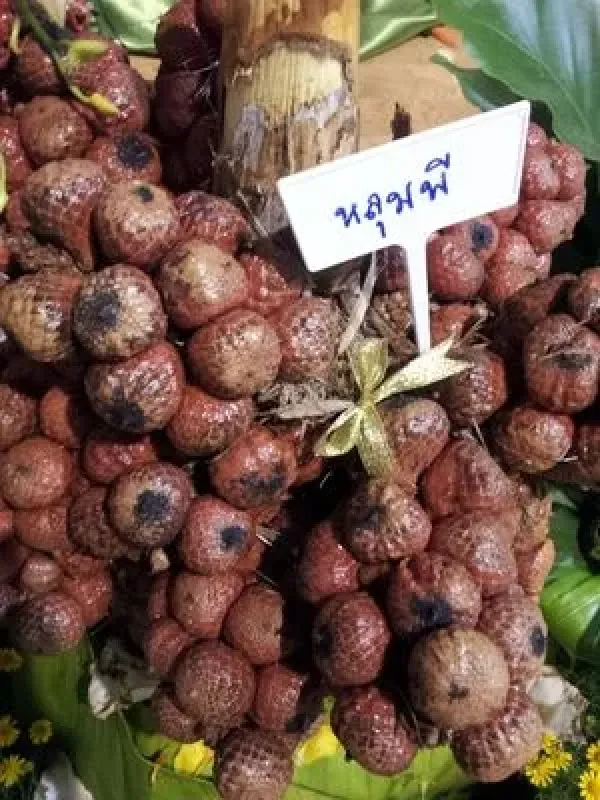
The fruit of Eleiodoxa is a key economic asset for local communities. It is typically harvested from the wild, where the sour-fleshed fruits are utilized in traditional regional cooking, particularly in the preparation of spicy sambals and refreshing beverages.
Harvesting
Harvesting of Eleiodoxa fruits involves manual collection from the base of the plant. The fruits are borne in dense, low-hanging clusters, which grow close to the ground, reflecting the palm's unique habit of fruiting near its subterranean or surface-level roots.
Harvesters must exercise caution due to the presence of sharp thorns on the foliage. The process is usually performed during the ripening season, ensuring that the fruits are collected before they fall into the swamp substrate, where they might quickly rot due to the excessive moisture.