
Quaqua
Quaqua
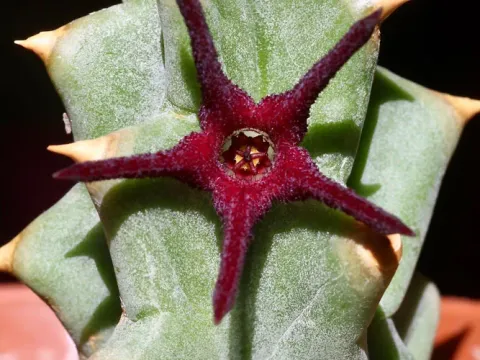
Quaqua is a genus of succulent plants within the Apocynaceae family. These plants are native to the arid regions of Southern Africa, where they have evolved to thrive in highly challenging environmental conditions.
What the section contains

Quaqua
Botanically, these plants are known for their distinct, succulent, and often tuberculate stems. They lack functional leaves, utilizing their stems for photosynthesis and water storage to endure long periods of drought in their habitat.
Successful cultivation requires a highly porous and gritty soil mixture. Standard potting compost is unsuitable; instead, a blend of pumice, coarse sand, and a small amount of inorganic potting medium is recommended to ensure rapid drainage.
These plants require a significant amount of bright light to maintain their structural integrity and typical growth form. In indoor environments, placing them in a position that receives several hours of direct morning sunlight is beneficial.
Watering must be approached with caution. During the active growing season, water only when the substrate has completely dried out. In winter, the plant enters a dormant phase and should be kept almost entirely dry to prevent physiological stress.
Mealybugs are the primary pest concern for the genus. These insects can hide in the crevices between the tubercles of the stems, making them difficult to detect and eradicate without thorough and repeated applications of systemic pesticides.
Fungal infections, particularly root and stem rot, represent the most significant threat to the survival of the plant. These diseases are almost always associated with poor ventilation or overwatering, necessitating strict adherence to a dry cultivation regime.