
Quaqua mammillaris
Quaqua mammillaris
Description
Growing requirements
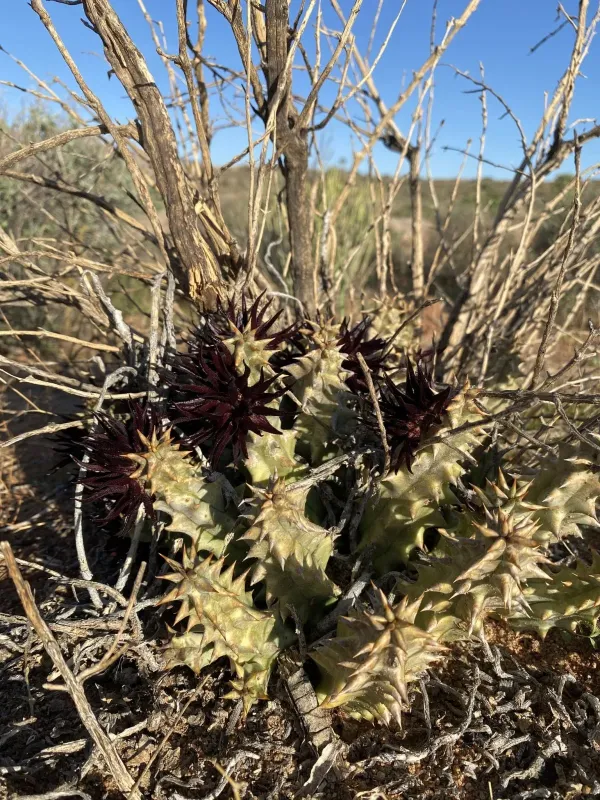
Quaqua mammillaris is a perennial succulent plant belonging to the Apocynaceae family. It is recognized by its unique succulent, jointed stems that are densely covered with prominent tubercles, giving it a distinctive textured appearance.
Originating from the arid regions of Southern Africa, this plant has adapted to harsh environmental conditions. Its evolutionary biology allows it to thrive in nutrient-poor soils with infrequent rainfall, making it a classic xerophytic species.
The cultivation of this species requires a growing medium that mimics its natural habitat. A highly porous, mineral-rich substrate consisting of coarse sand and small gravel is essential to prevent any root rot.
This crop demands high light intensity throughout the year. When grown in indoor settings, it should be placed in the sunniest possible location to ensure the plant maintains its rigid form and healthy coloration.
Economically, Quaqua mammillaris is cultivated primarily in the ornamental sector. It is a prized specimen for arid-themed garden designs and specialized horticultural collections focused on rare succulent flora.
Main diseases and pests
The most common cause of failure in cultivating this plant is overwatering. Excessive moisture in the soil leads to rapid decomposition of the roots, which can spread to the succulent stems within days.
Mealybugs represent a significant threat to this species. These pests often congregate in the crevices between the tubercles, where they are difficult to remove manually and require targeted chemical intervention.
Poor ventilation is a critical issue that encourages the development of fungal infections. If air humidity remains consistently high, the plant surface may develop dark, necrotic lesions that compromise its integrity.
Spider mites are another potential pest, particularly when the environment is warm and extremely dry. They cause fine webbing and stippling on the plant, which can eventually lead to tissue damage.
To maintain health, growers should practice strict hygiene, ensuring that irrigation is only provided when the substrate is completely dry. Regular inspections allow for early detection of potential outbreaks.