
Madagascar rubber vine
Cryptostegia madagascariensis
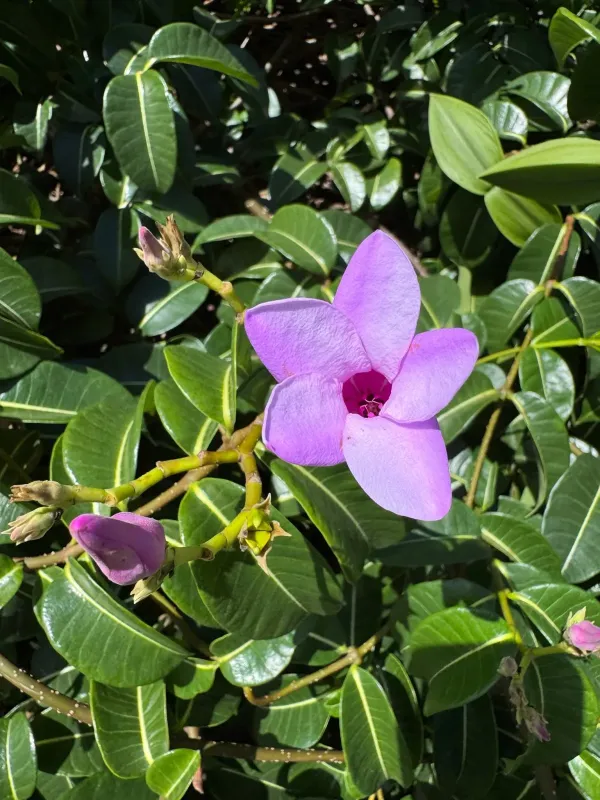
Description
Sowing dates
Propagation of Cryptostegia madagascariensis is typically achieved through seeds or vegetative stem cuttings. In its native tropical habitat, seeds exhibit high germination rates under conditions of consistent warmth above 20°C and high soil moisture levels.
For agricultural purposes, seeds are sown in sterile, well-draining substrates within protected environments like greenhouses. It is crucial to monitor moisture carefully, as excessive water during the seedling stage often leads to fungal outbreaks and root failure.
Cuttings are preferred for commercial propagation to ensure genetic uniformity and faster development. Semi-hardwood cuttings treated with rooting hormones are placed in peat-based media under plastic covers, which maintain the essential humidity levels for rapid root formation.
Transplanting to permanent plots is carried out once the plants reach a height of approximately 30 to 40 centimeters. Proper spacing is vital to allow sufficient airflow and sunlight penetration, which are necessary for the development of sturdy, latex-rich stems.
Field planting in open areas is timed to coincide with the onset of the stable warm season. As a tropical plant, it is highly sensitive to cold stress; therefore, even minor frosts can cause irreparable damage to young plantations, necessitating careful regional planning.
Growing requirements
Cryptostegia madagascariensis is a vigorous, perennial woody vine belonging to the Apocynaceae family. Originating from Madagascar, the plant is evolutionarily adapted to produce significant quantities of latex as a defense mechanism against herbivory.
The crop requires full sun exposure to maximize photosynthetic efficiency. While it can grow in partial shade, such conditions significantly reduce the accumulation of rubber compounds within the plant's vascular tissues, thereby lowering the yield of raw material.
It prefers fertile, well-draining soils with a neutral or slightly acidic pH balance. Sandy or loamy soils are ideal, provided they are managed to avoid waterlogging, which the root system cannot tolerate for extended periods without succumbing to rot.
Consistent irrigation is required during the active growth phase. Although the plant possesses some drought tolerance due to its woody structure, long-term water stress inevitably leads to a decline in biomass production and a reduction in latex quality.
Trellising is a fundamental component of the production system. Because it is a climbing vine, vertical support structures are essential to manage plant architecture, facilitate maintenance, and improve the efficiency of latex extraction processes during harvest.
Yield
The primary economic output of this culture is the latex extracted from the stem tissues. Systematic pruning is an essential agricultural practice that encourages lateral branching, which in turn increases the total volume of stems available for potential harvest.
Initial harvests can typically commence 2 to 3 years after planting. Yield optimization depends on a balanced fertilization program focusing on nitrogen for vegetative growth and potassium to support the metabolic processes responsible for latex synthesis.
Processing involves extracting natural rubber from the harvested plant material, often through mechanical crushing or chemical solvent techniques. The high rubber content in the plant's biomass makes it an interesting subject for sustainable bio-polymer production research.
Beyond rubber extraction, the plant is widely utilized for ornamental purposes due to its attractive, trumpet-shaped flowers. This dual-purpose utility allows growers to generate secondary income through the sale of seedlings to the landscaping and nursery sectors.
The lifespan of a productive plant is generally estimated at around ten years. With professional management, a plantation can provide stable yields throughout this period, demonstrating high resilience and continuous biomass accumulation under tropical conditions.
Main diseases and pests
Madagascar rubber vine is generally hardy, but it is susceptible to common pests like aphids and spider mites, particularly in low-humidity environments. These pests primarily target soft, emerging foliage, which can stunt overall plant development.
Fungal diseases related to root rot are common in poorly drained soils or areas with excessive rainfall. Proper ventilation and spacing are the best preventative measures, as they ensure that the foliage dries quickly and soil moisture levels remain within optimal limits.
In some regions, this species is classified as an invasive weed because it can rapidly colonize adjacent areas if left unmanaged. Strict containment strategies are required to prevent seed dispersal and ensure the crop remains within the boundaries of the plantation.
Weed management during the early establishment phase is critical to prevent resource competition. Utilizing organic mulches can effectively suppress competing vegetation while preserving soil moisture, giving the rubber vines the best possible start.
Operators must exercise caution during handling, as the milky sap of the plant contains chemicals that can cause skin and eye irritation. Wearing appropriate protective gear, including gloves and goggles, is a mandatory safety protocol for all personnel on the farm.