
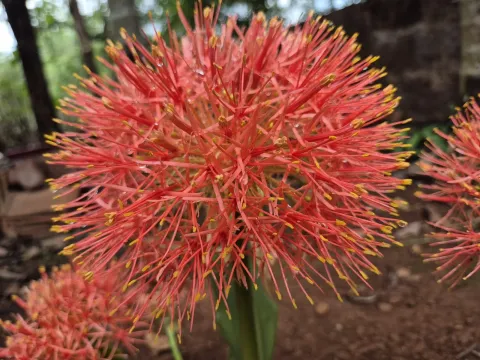
Scadoxus
Scadoxus
Scadoxus is a striking bulbous genus belonging to the Amaryllidaceae family, native to tropical Africa. Known for its spectacular, fire-like spherical inflorescences, this plant serves as a magnificent centerpiece in botanical collections and indoor gardens.
What the section contains


Scadoxus
The plant thrives in bright, indirect light conditions. While it requires substantial light to promote vigorous growth and successful blooming, direct mid-day sun must be avoided, as it can cause significant damage to the lush, broad foliage.
An ideal growing medium for Scadoxus must be well-draining, rich in organic matter, and slightly acidic. A mix consisting of loam, peat moss, and coarse sand is recommended to ensure adequate aeration around the bulb and prevents the risk of rot.
Watering practices are critical for the long-term health of the bulb. During the active growing season, the soil should be kept consistently moist but never waterlogged. As the plant enters its dormancy phase, water should be drastically reduced to allow the bulb to rest.
The cultural use of Scadoxus is predominantly ornamental. Because of its specific temperature requirements, it is widely utilized as a potted specimen, allowing gardeners to move it to sheltered positions or indoors during colder months to ensure survival.
Scadoxus is susceptible to common houseplant pests such as scale insects, mealybugs, and spider mites. These pests tend to colonize the leaf surfaces and junctions, draining the plant's energy and causing stunted development.
Fungal diseases are a primary threat, particularly bulb rot, which is almost exclusively caused by overwatering or inadequate drainage. If the soil remains saturated for too long, the tissues of the bulb collapse, leading to rapid plant decline.
Botrytis or grey mold can develop if the environment is humid and lacks proper air circulation. This pathogen can quickly spread from leaves to the stem, necessitating prompt removal of infected parts and improvement of environmental conditions.
Proper hygiene is essential for successful cultivation. Removing dead leaves, sanitizing pots before planting, and ensuring that no debris accumulates on the soil surface are effective measures to minimize the risk of recurring infestations and infections.
Chemical control should be approached with caution. If pests are detected, targeted application of horticultural oils or systemic insecticides approved for ornamental bulbs is advised to eliminate threats without causing phytotoxic stress to the plant.