
Scadoxus cinnabarinus
Scadoxus cinnabarinus
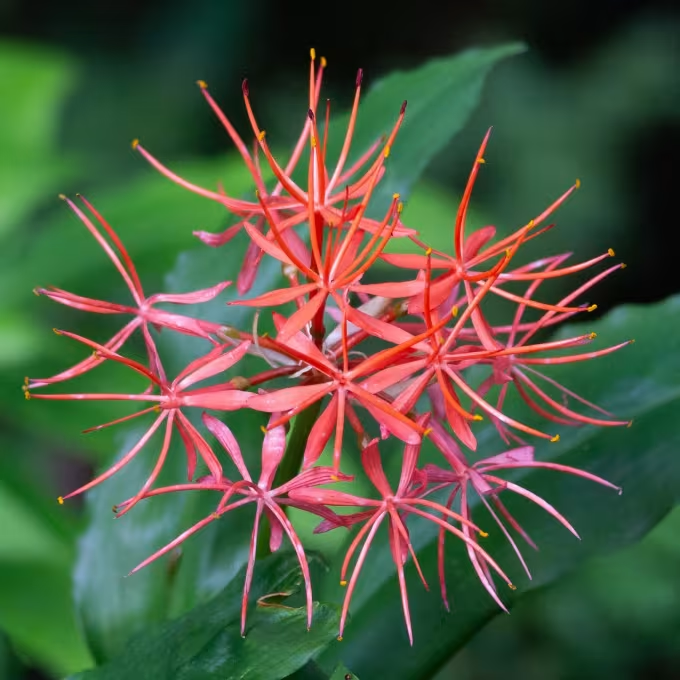
Description
Growing requirements
Scadoxus cinnabarinus is a perennial herbaceous plant belonging to the Amaryllidaceae family. It is distinct for its rhizomatous root system rather than the true bulb found in other related species.
Originating from the tropical rainforests of West and Central Africa, this plant thrives in shaded environments. It naturally grows on the forest floor, protected from direct sunlight by higher canopy layers.
The soil requirements involve a well-aerated, moisture-retentive medium rich in organic matter. A slightly acidic to neutral pH is preferred to ensure optimal nutrient absorption and healthy root development.
Temperature management is critical for this species. It requires consistent tropical conditions with temperatures ranging from 18 to 25 degrees Celsius, avoiding exposure to chilling drafts or frost.
In terms of хозяйственное usage, it is primarily cultivated as a high-value ornamental plant. Its striking scarlet, spherical inflorescences make it a sought-after subject for indoor and greenhouse collections.
Main diseases and pests
Red spider mites are the primary pest concern, especially when humidity levels drop below optimal ranges during the dry season or in climate-controlled spaces.
Root rot is the most significant pathological threat to Scadoxus cinnabarinus. It is almost exclusively caused by overwatering or the use of heavy, waterlogged potting substrates.
Mealybugs may colonize the leaf axils, leading to localized tissue damage. Mechanical removal or targeted application of insecticidal soaps is recommended for early control.
Regular sanitation of the growing environment is essential to prevent the spread of fungal spores. Ensuring adequate air movement helps mitigate the risk of leaf spot diseases.
Systemic fungicides should be used with caution, ensuring that the dosage is strictly monitored to avoid chemical burns to the fleshy leaves and roots of the plant.