
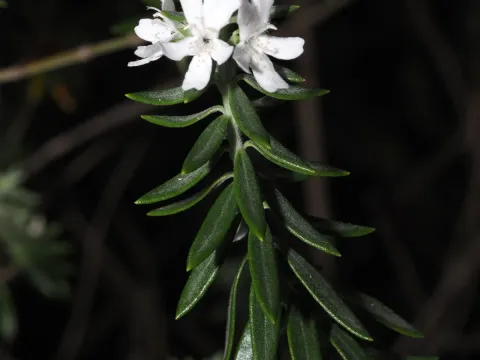
Westringia
Westringia
Westringia is a genus of evergreen shrubs in the Lamiaceae family. Often referred to as "Australian rosemary," it is widely appreciated in landscaping for its dense, needle-like foliage and small, white or pale-violet flowers that bloom throughout the year.
What the section contains


Westringia
The plant originates from Australia, where it has adapted to various coastal and inland environments. Its natural resilience to salt spray and drying winds makes it a valuable species for coastal gardening and xeriscaping.
Successful cultivation requires well-draining soil with a neutral to slightly acidic pH. The plant thrives in full sun, and although it can tolerate light shade, its growth habit remains most compact and aesthetically pleasing in bright, open conditions.
Regarding climate, Westringia is suited to Mediterranean-type climates. It has limited frost tolerance and should be protected from temperatures below freezing, typically grown in containers in cooler temperate zones.
Agricultural techniques include regular pruning to maintain the desired shape and size. As a low-maintenance crop, it requires minimal fertilization, focusing mainly on establishing a robust root system during the initial planting phase.
The primary threat to Westringia is root rot caused by poor soil drainage and waterlogging. Excessive moisture in the root zone is the most common reason for plant failure, necessitating careful irrigation management.
Pests such as spider mites and mealybugs can affect the plant, particularly in sheltered environments or greenhouse conditions where airflow is restricted and ambient temperatures are elevated.
To prevent disease outbreaks, it is crucial to ensure proper air circulation around the canopy. Avoiding overhead watering can significantly reduce the risk of fungal infections such as powdery mildew.
Routine inspection of the foliage is recommended to detect any early signs of infestation. Integrated Pest Management (IPM) practices, including the use of horticultural oils, are generally effective in managing occasional pest issues.
Proper sanitation, including the removal of dead or dying branches, helps maintain plant vigor and prevents the accumulation of organic debris that could harbor pests or pathogens near the stem base.