
Westringia rigida
Westringia rigida
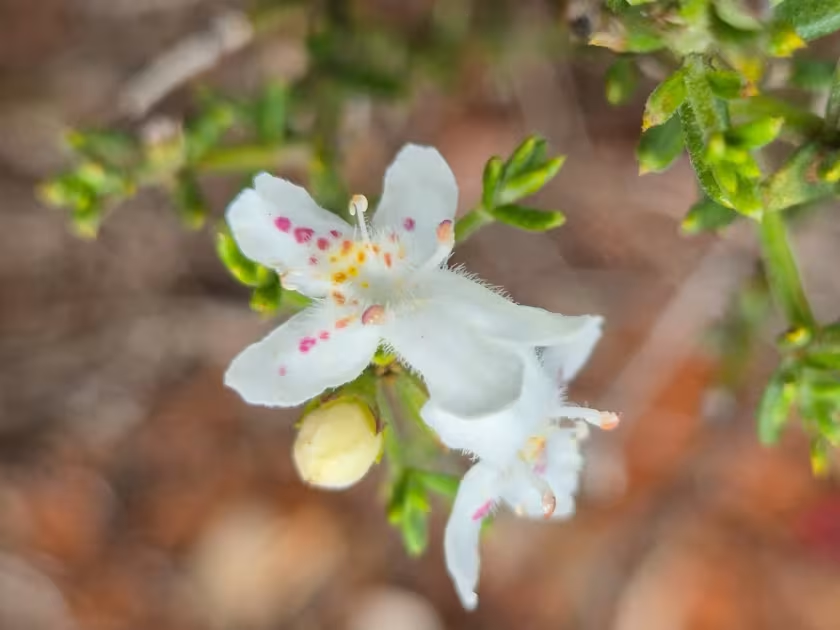
Description
Growing requirements
Westringia rigida, a member of the Lamiaceae family, is a resilient evergreen shrub native to various arid regions of Australia. Known for its tough, rigid foliage, it serves as a staple in xeriscaping due to its remarkable ability to thrive in challenging environmental conditions.
This shrub typically grows as a compact, densely branched plant, reaching heights of up to 1.5 meters. Its morphological features, such as small, whorled leaves, are evolutionary adaptations designed to minimize water loss through transpiration in hot climates.
Successful cultivation requires full sun exposure to maintain the plant's structural integrity and dense growth habit. While it is adaptable to a variety of soil types, it absolutely demands excellent drainage to survive, as saturated root zones are detrimental to its health.
The plant demonstrates high tolerance to poor nutrient profiles in soils. However, in an agricultural or ornamental setting, applying low-phosphorus fertilizers can encourage healthier foliage development during the active growth stages.
In terms of usage, Westringia rigida is highly valued for erosion control, hedges, and screening. It is a low-maintenance species that significantly reduces the demand for irrigation and synthetic inputs once fully established in the landscape.
Main diseases and pests
The primary threat to Westringia rigida is the development of root and crown rot, caused by over-irrigation or soil compaction. Maintaining a well-drained substrate is the most effective preventative measure against these fungal pathogens.
Insect pests such as spider mites and mealybugs can occasionally infest the foliage, particularly in environments with poor air circulation. These pests extract sap from the leaves, leading to chlorosis and reduced plant vigor if left unchecked.
Scale insects represent another potential risk, often attaching themselves to the woody stems. Monitoring for localized yellowing or sticky residues on the foliage is essential for early detection and mitigation of these infestations.
Preventative care involves regular pruning to ensure sunlight reaches the interior of the shrub. Thinning out the branches prevents humidity traps, which are a major trigger for opportunistic fungal growth and foliage blight.
Should chemical intervention be required, it is recommended to apply targeted horticultural oils or insecticidal soaps. These treatments are generally effective against soft-bodied pests while minimizing damage to the local ecological balance.