
Viburnum bodnantense Aberconway
Viburnum x bodnantense Aberc.
Description
Growing requirements
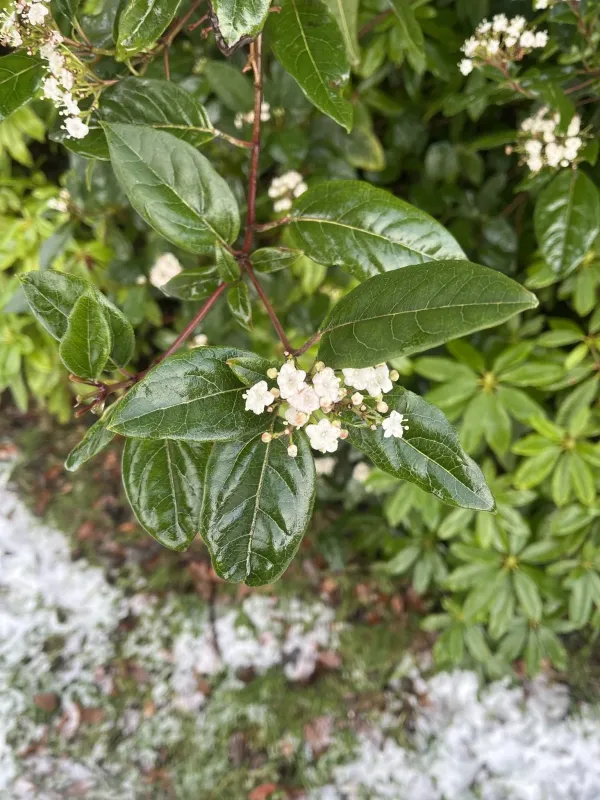
Viburnum bodnantense 'Aberconway' is a deciduous ornamental shrub belonging to the Adoxaceae family. This hybrid, derived from V. farreri and V. grandiflorum, is highly prized for its early spring or late winter blooms, which appear on bare branches and fill the garden with a delicate fragrance.
To ensure healthy development, this shrub should be planted in a location that receives full sun or partial shade and is sheltered from harsh, drying winds. It prefers a fertile, moisture-retentive, yet free-draining soil with a neutral to slightly acidic pH level.
The plant exhibits an upright growth habit, reaching heights of 2-3 meters. Its leaves are dark green during the growing season, transforming into stunning shades of bronze and purple in autumn, which adds to the structural interest of the garden throughout the year.
In terms of maintenance, consistent soil moisture is crucial, especially during the first few years after planting. While established shrubs show decent drought tolerance, additional irrigation during dry spells will significantly improve flowering performance in the following season.
This variety serves a decorative purpose in landscaping. It is perfect for mixed borders, foundation plantings, or as a focal point in a garden where early flowering is desired to signal the transition between winter and spring.
Main diseases and pests
While generally robust, this Viburnum can be susceptible to fungal issues such as powdery mildew or leaf spot, especially in environments with poor air circulation. Regular thinning of the canopy helps to mitigate these risks by allowing sunlight and air to reach the center of the shrub.
Pests like the Viburnum beetle can cause significant leaf damage if left unchecked. Gardeners are advised to monitor for larvae and egg masses on the stems and leaves, manually removing them or using appropriate organic or systemic insecticides when necessary.
Aphids are another common problem, particularly on young, tender growth during the spring. They can be managed by biological control methods or by washing the plants with insecticidal soaps if an infestation occurs early in the season.
Root rot is often a consequence of waterlogged soil conditions. Ensuring that the planting site has excellent drainage is the most effective preventative measure against these soil-borne pathogens which can compromise the plant's vascular system.
A well-planned maintenance routine, including deadheading and sanitary pruning, is vital for plant health. By removing diseased or dead branches promptly, gardeners create a less hospitable environment for pathogens and improve the overall vigor of the shrub.