
Smooth witherod
Viburnum nudum L.
Description
Growing requirements
The smooth witherod (Viburnum nudum L.) is a deciduous shrub belonging to the Adoxaceae family. Native to the southeastern United States, this species thrives in swampy thickets and moist forests, making it an excellent candidate for wet garden areas.
For agricultural and landscaping success, the plant requires acidic, organic-rich soil. While it prefers consistent moisture, soil drainage must be sufficient to prevent long-term saturation, which could inhibit root respiration and nutrient uptake during the growing season.
In terms of climate, Viburnum nudum is quite adaptable, exhibiting high cold hardiness. It performs best when planted in full sun to partial shade, where it develops its characteristic glossy foliage and exhibits its full ornamental potential during the flowering stage.
Good agricultural practice involves regular watering during dry spells to maintain soil moisture levels. Application of specialized acid-loving plant fertilizers can be beneficial if the soil pH tends towards neutrality, ensuring the shrub remains vigorous and disease-resistant.
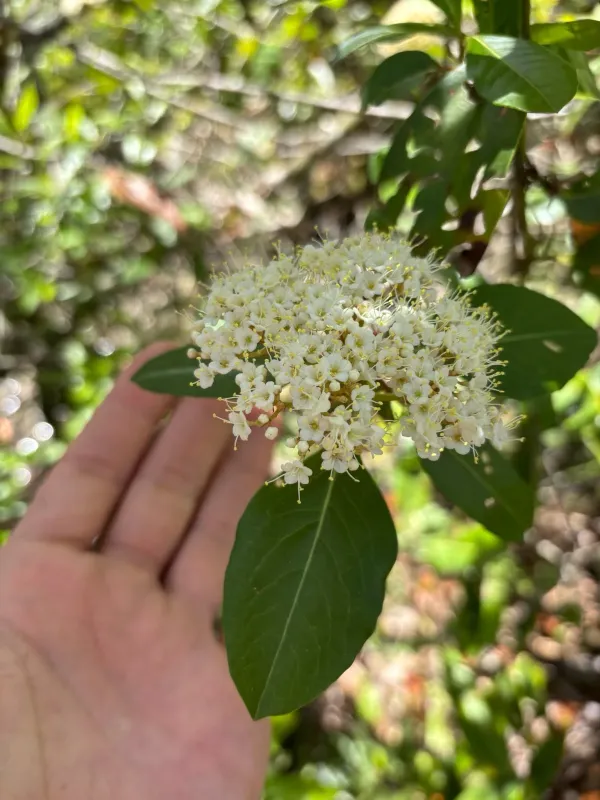
Its primary use is ornamental, valued for its seasonal interest: white spring flowers, summer fruit that shifts from pink to dark blue-black, and dramatic autumn foliage color. It serves as a vital food source for avian species, making it a staple in wildlife-friendly gardens.
Main diseases and pests
The main phytosanitary concerns involve fungal diseases such as leaf spot and powdery mildew. These issues are frequently triggered by poor air circulation and excessive humidity, emphasizing the importance of proper spacing during initial planting.
Insect pests include the viburnum leaf beetle, which can defoliate plants if not monitored. Aphids and scale insects can also occasionally infest the stems, requiring integrated pest management (IPM) strategies to protect the plant's health and appearance.