
Wrinkle-leaved viburnum
Viburnum rhytidophyllum Hemsl.
Description
Growing requirements
Viburnum rhytidophyllum, commonly known as the wrinkle-leaved viburnum, is an evergreen shrub belonging to the Adoxaceae family. It is native to western and central China, where it grows in wooded areas.
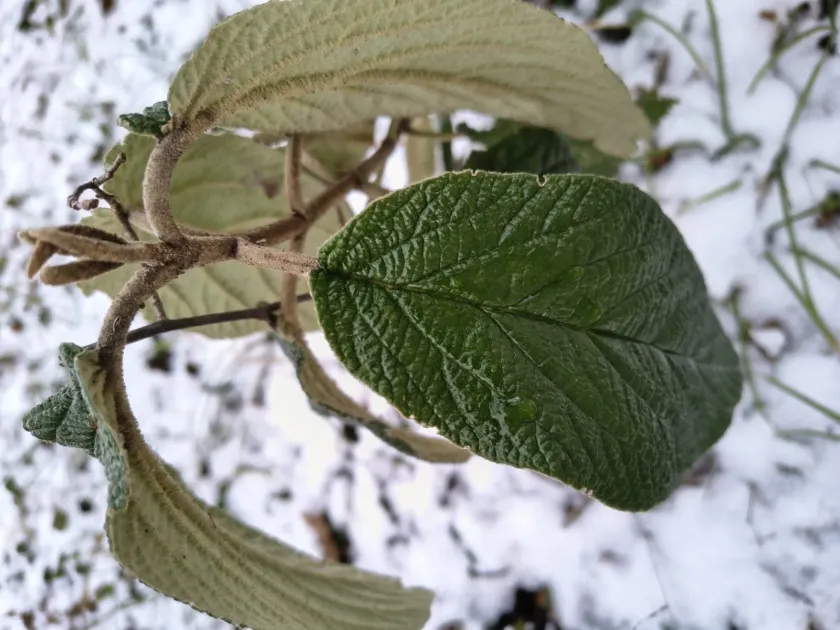
The plant is highly valued in ornamental horticulture for its distinctively long, deeply veined, dark green leathery leaves and flat-topped clusters of creamy white flowers.
It thrives best in locations protected from cold, drying winds, which can damage the evergreen foliage during winter months. A semi-shaded position is ideal for maintaining the health of the leaves.
Soil requirements are relatively specific: the plant prefers moist, fertile, humus-rich, and well-drained soils. It does not tolerate waterlogging and may suffer in heavy, compacted clays.
Cultural care involves mulching the root zone annually to maintain soil moisture and providing sufficient water during dry summer spells to ensure vigorous growth throughout the season.
Main diseases and pests
The wrinkle-leaved viburnum is susceptible to several common pests, with aphids being the most prominent, particularly affecting the young shoots and the undersides of the leaves in spring.
Viburnum beetles can cause significant damage by feeding on the leaves, creating holes and potentially skeletonizing the foliage if the infestation remains uncontrolled.
Powdery mildew is a frequent fungal problem that presents as a white, dusty coating on leaves, typically occurring in environments with poor air circulation or high humidity.
Leaf spot diseases, caused by various fungal pathogens, may also appear during cool, wet spring weather, leading to premature leaf drop if not properly managed.
Management strategies focus on proper plant spacing to encourage airflow, regular sanitation pruning to remove diseased wood, and the application of fungicides only when symptoms are severe.