
Laurustinus
Viburnum tinus L.
Description
Growing requirements
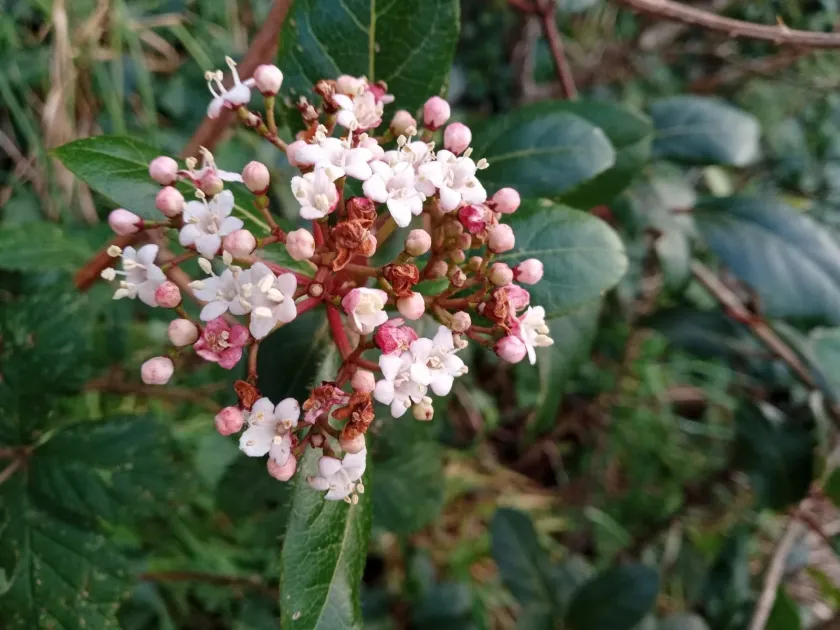
Laurustinus, scientifically known as Viburnum tinus, is a robust evergreen shrub belonging to the Adoxaceae family. Native to the Mediterranean region, it is widely appreciated for its glossy dark leaves, clusters of small white flowers, and metallic blue berries that appear after blooming.
The plant thrives in Mediterranean-style climates, requiring mild winters and a sheltered location to protect it from harsh, drying winds. It performs best in full sun or partial shade, with exposure to light helping to maintain the density of its foliage throughout the colder months.
Well-drained, humus-rich soil is essential for the healthy development of this shrub. While it is tolerant of various soil types, including alkaline and clay soils, it must be provided with adequate drainage to prevent root rot, as the species is highly susceptible to waterlogged conditions.
Agronomic management includes consistent watering during the establishment phase and during periods of drought. Annual fertilization in early spring with a balanced fertilizer encourages vigorous growth and helps the plant recover quickly from any winter-induced stress.
Pruning should be performed after the main flowering period to maintain the desired shape and size of the shrub. As the plant is slow-growing, light maintenance pruning is usually sufficient to stimulate new growth and keep the plant within the confines of its designated space in the landscape.
Main diseases and pests
Viburnum tinus is susceptible to certain fungal diseases such as leaf spot and powdery mildew, especially in humid environments with poor air circulation. Proper spacing between plants and regular cleaning of fallen leaves are crucial preventive measures to reduce the spread of spores.
Pest management focuses on controlling aphids and spider mites, which can infest the tender new growth during the spring season. Integrated pest management strategies, including the use of neem oil or insecticidal soaps, are generally effective in managing these infestations without harming beneficial garden insects.