
Japanese snowball
Viburnum plicatum Thunb.
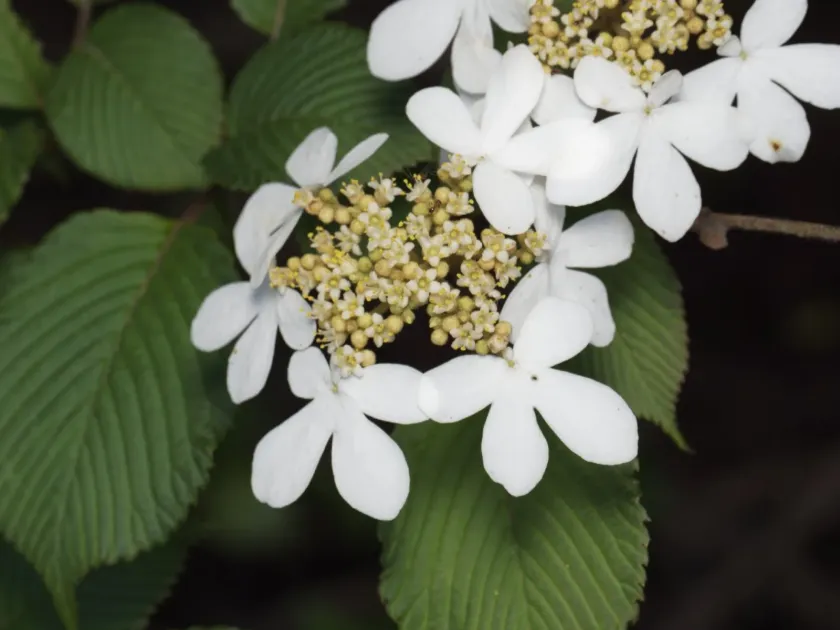
Description
Growing requirements
Viburnum plicatum, known as the Japanese snowball, is an ornamental deciduous shrub belonging to the Adoxaceae family. Native to China, Japan, and Korea, this plant is highly regarded for its unique horizontal branching habit, which creates a tiered effect during the blooming season.
The shrub thrives in fertile, well-drained soils rich in organic matter. While it is adaptable to various soil types, it performs best in neutral to slightly acidic conditions. Maintaining adequate soil moisture is essential, especially during the first few years after planting to ensure deep root establishment.
In terms of light exposure, the species prefers full sun to light shade. In regions with very hot summers, afternoon shade is highly recommended to prevent leaf scorch and to keep the foliage vibrant throughout the growing season.
Good agricultural practice for this plant involves annual mulching with compost or bark to regulate soil temperature and retain moisture. A balanced fertilizer applied in early spring helps support vigorous growth and consistent, dense flower production across the horizontal branches.
Pruning should be done judiciously to maintain the plant's characteristic structure. It is advised to prune immediately after flowering to encourage new growth that will produce buds for the following year, avoiding severe cuts that might disrupt the natural aesthetic of the tiered branches.
Main diseases and pests
The viburnum leaf beetle is the most significant pest for this species. Larvae feed on the leaves, leaving behind a skeletonized appearance. Early detection and the removal of egg-laden twigs in the winter are effective cultural methods to reduce the subsequent infestation intensity.
Powdery mildew is a common fungal threat that appears as a dusty white coating on leaves during periods of high humidity and poor airflow. Managing plant density and providing adequate spacing between specimens significantly mitigates the risk of fungal spread.
Aphids can frequently target the succulent new growth of the plant. If left untreated, they can cause curled, stunted leaves and transmit viral diseases. Horticultural oils or insecticidal soaps applied at the first sign of infestation are generally effective control measures.
Leaf spot diseases, caused by various fungi, can occur during rainy summers. These infections primarily affect the foliage, causing premature drop. Sanitation, such as removing fallen leaves at the end of the season, is crucial to prevent overwintering of fungal spores.
Root rot, resulting from waterlogged soil conditions, is a lethal threat to the Japanese snowball. Ensuring that the planting site has excellent drainage and avoiding over-irrigation are the best strategies to maintain the plant's health and prevent soil-borne pathogens.