
Sandankwa viburnum
Viburnum suspensum Lindl.
Description
Growing requirements
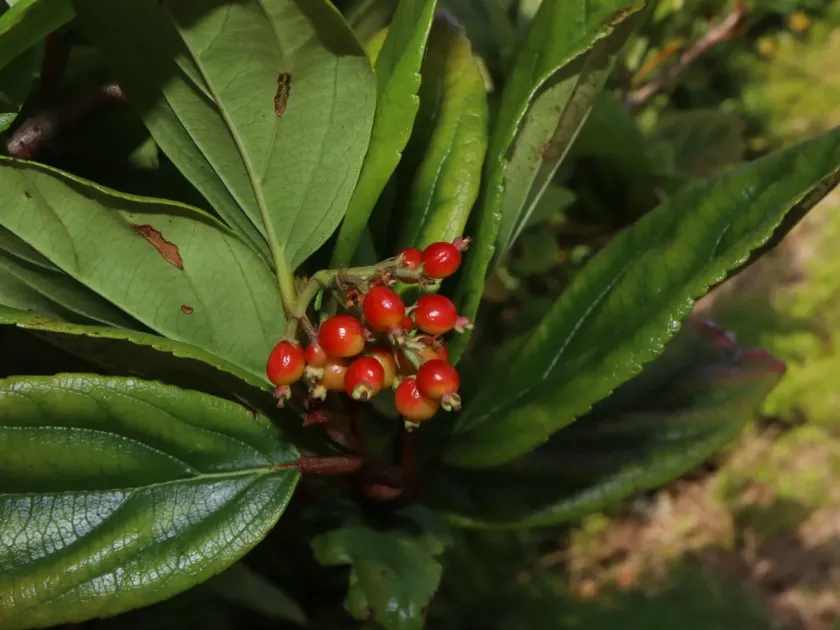
Sandankwa viburnum (Viburnum suspensum) is a dense, evergreen shrub belonging to the Adoxaceae family. Native to Japan, this plant has become a popular choice for warm climates due to its thick, leathery leaves and natural ability to form a dense hedge.
The plant thrives in USDA zones 9 and 10, showing a strong preference for warm environments. It lacks cold hardiness, making it unsuitable for freezing climates unless grown in containers that can be moved indoors during winter months.
Optimal growth requires well-draining, fertile soil with a neutral to slightly acidic pH. While it is adaptable to various soil types, maintaining consistent moisture levels while preventing waterlogging is crucial for plant health.
Regarding light, this species performs best in full sun to partial shade. In extremely hot regions, providing some afternoon shade helps prevent leaf scorch and maintains the rich, dark green color of the foliage.
Cultural practices include regular pruning to control its size and shape, as the plant can become quite sprawling if left untended. Fertilization should be applied during the early growing season to support steady vegetative development.
Main diseases and pests
Sandankwa viburnum is susceptible to several common pests, most notably aphids and scale insects. These pests cluster on the undersides of leaves and young stems, requiring periodic inspection and potential applications of horticultural oil or systemic insecticides.
Fungal issues, such as leaf spot, may occur in conditions of high humidity and poor airflow. Managing water levels, avoiding overhead irrigation, and ensuring the shrub is planted with adequate spacing are the most effective ways to prevent disease outbreaks.