
Awabuki Sweet Viburnum
Viburnum odoratissimum Ker Gawl. var. awabuki (K. Koch) Zabel x Viburnum sieboldii Miq.
Description
Growing requirements
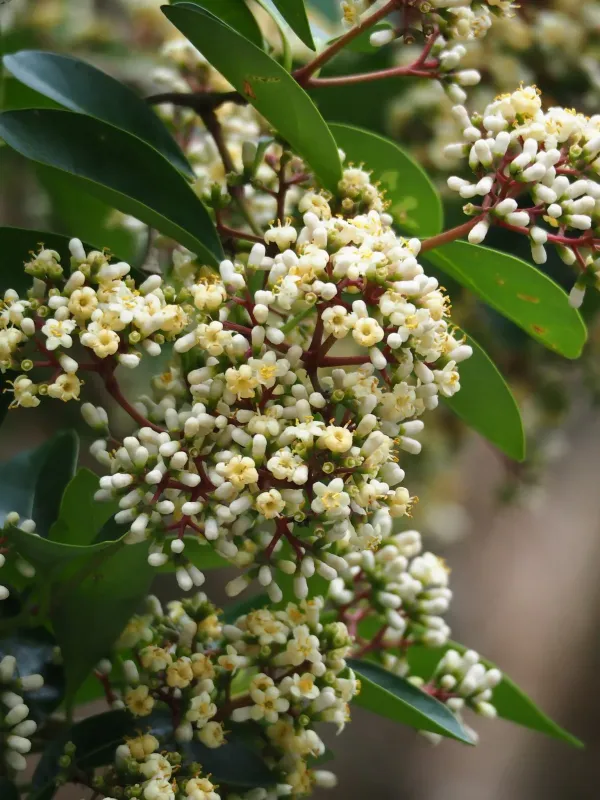
Awabuki Sweet Viburnum (Viburnum odoratissimum var. awabuki) is a robust evergreen shrub belonging to the Adoxaceae family. It is widely recognized for its glossy, thick, leathery leaves and fragrant white flower clusters that appear in spring.
Originating from subtropical East Asia, this plant thrives in warm climates. It has become a staple in landscaping projects due to its fast growth rate and ability to form dense, privacy-providing hedges in temperate to subtropical zones.
To ensure optimal health, the plant requires well-drained, fertile soil. It is highly adaptable to various soil types, ranging from sandy loam to heavy clay, provided that drainage is adequate to prevent root suffocation.
Sun exposure should be managed according to the regional heat level. While it prefers full sun to partial shade, in extremely hot climates, some afternoon shade is beneficial to prevent leaf scorching and excessive water loss.
Regular maintenance involves light pruning to shape the plant and maintain its desired size. Fertilization with a balanced slow-release fertilizer in early spring promotes vigorous growth and enhances the overall foliage density.
Main diseases and pests
The primary threats to this cultivar include fungal pathogens such as powdery mildew, which can occur if the plant is situated in a location with poor air circulation and high humidity levels.
Pests that frequently affect the plant include aphids and scale insects. These pests feed on the nutrient-rich sap of new shoots, which can lead to stunted growth and the development of sooty mold on the foliage.
Root rot is a significant concern in sites with poor drainage. Proper site selection or the use of raised beds can mitigate this risk by ensuring that the root system remains aerated during periods of heavy rainfall.
Integrated pest management strategies are recommended, starting with mechanical removal of visible pests and moving to biological controls like neem oil or insecticidal soaps before resorting to systemic chemical treatments.
During the dormant season, inspect the plant for signs of winter burn if exposed to freezing winds. Applying protective coverings or anti-desiccant sprays can help preserve the foliage in colder climate zones.