
Sweet viburnum
Viburnum odoratissimum Ker Gawl. var. awabuki (K. Koch) Zabel
Description
Growing requirements
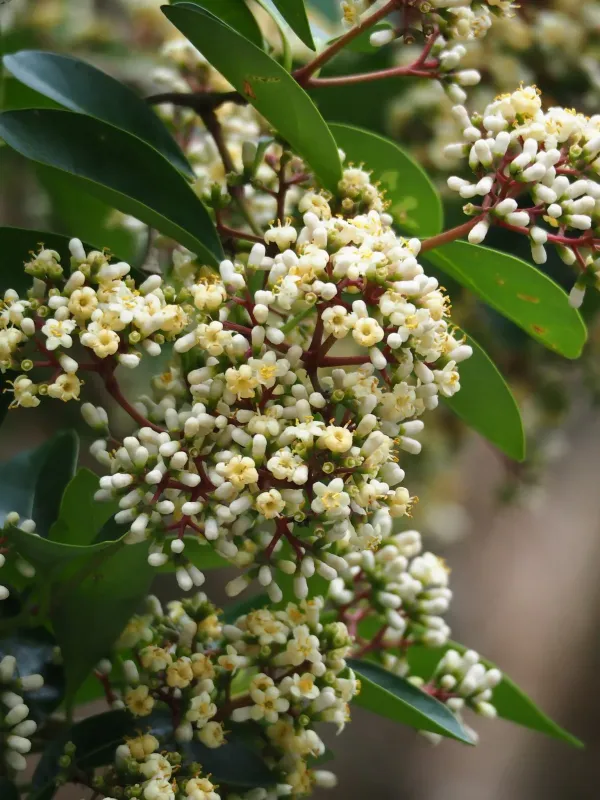
Sweet viburnum (Viburnum odoratissimum var. awabuki) is a vigorous, evergreen shrub or small tree belonging to the Adoxaceae family. It is highly valued in horticulture for its glossy, thick, leathery foliage and fragrant flower clusters.
Native to eastern and southeastern Asia, this cultivar thrives in warm, subtropical climates. Its distribution range is typically limited by its hardiness, as it prefers regions without prolonged, severe frost.
For optimal growth, it requires a location with full sun to partial shade and fertile, well-draining soil. It is adaptable to a variety of soil types, provided that they are not prone to waterlogging, which can cause root decay.
Agricultural practices for this plant include regular irrigation, especially during the establishment phase and periods of drought, to keep the large, evergreen leaves from wilting or losing their luster.
Economically, sweet viburnum is extensively used in landscape architecture. Its dense, upright growth habit makes it an excellent choice for privacy hedges, windbreaks, and mass plantings in urban environments.
Main diseases and pests
The most common pests affecting sweet viburnum are aphids, which target new growth and tender leaves. Infestations can cause curling and stunted development of the foliage.
Scale insects and mealybugs also pose a significant threat to the plant's health, often congregating on stems and the underside of leaves to feed on plant sap.
Fungal diseases, such as powdery mildew, frequently occur in environments with poor airflow and high humidity. This manifests as a white, powdery coating on the surface of the leaves.
Leaf spot pathogens can also impact the aesthetics of the shrub. Proper pruning to open up the canopy for better air circulation is a primary preventive measure against these conditions.
Integrated pest management, including regular inspection and the timely application of horticultural oils or systemic insecticides, is essential to maintaining the plant's structural integrity and aesthetic value.