
Luzon viburnum
Viburnum luzonicum Rolfe
Description
Growing requirements
Luzon viburnum (Viburnum luzonicum) belongs to the Adoxaceae family and is native to the tropical and subtropical mountainous forests of Southeast Asia, including the Philippines and Taiwan.
This shrub species is characterized by its evergreen foliage and its ability to thrive in warm, humid climates with adequate rainfall throughout the growing season.
Cultivation requires fertile, well-draining soil that remains consistently moist but not waterlogged, as the root system of this viburnum is sensitive to prolonged anaerobic conditions.
Ideally, the plant should be situated in a location that receives partial shade to full sun, protected from harsh environmental stressors that could inhibit its vegetative development.
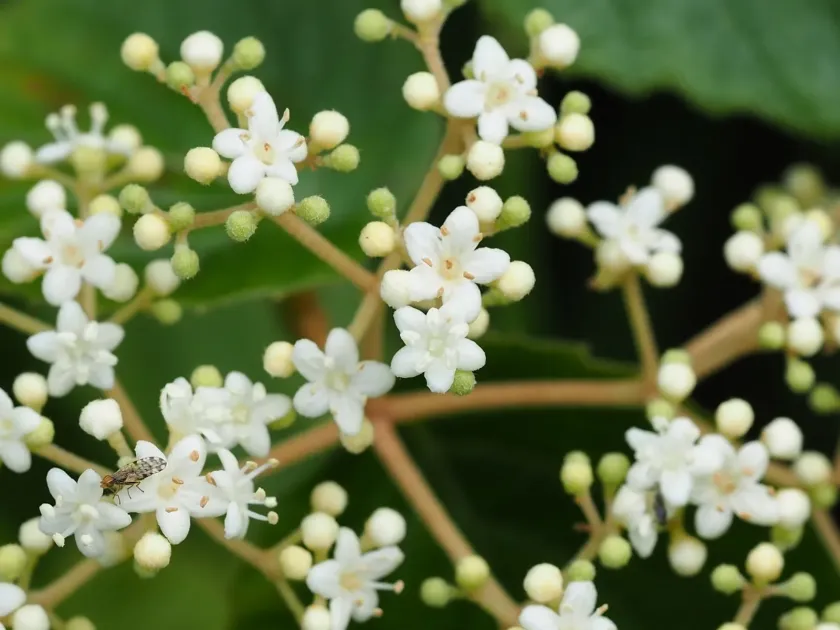
In landscape management, it serves as an excellent ornamental shrub, valued for its dense growth habit and elegant floral displays that enhance the biodiversity of tropical gardens.
Main diseases and pests
Common pests affecting Viburnum luzonicum include aphids and scale insects, which settle on the underside of the leaves and stems, causing yellowing and stunted growth.
Fungal diseases like powdery mildew and leaf spots represent the primary biological threats, often triggered by poor air circulation and high humidity levels around the foliage.
Cultural control measures, such as thinning the interior branches to promote better airflow, are essential strategies for minimizing the impact of these common pathogens.
Integrated pest management protocols involving the use of horticultural oils or organic soap sprays can effectively mitigate damage without harming beneficial pollinating insects.
Proactive monitoring during the spring and early summer seasons is crucial for maintaining the plant's health and aesthetic appeal in managed horticultural environments.