
Viburnum davidii x Viburnum propinquum
Viburnum davidii Franch. x Viburnum propinquum Hemsl.
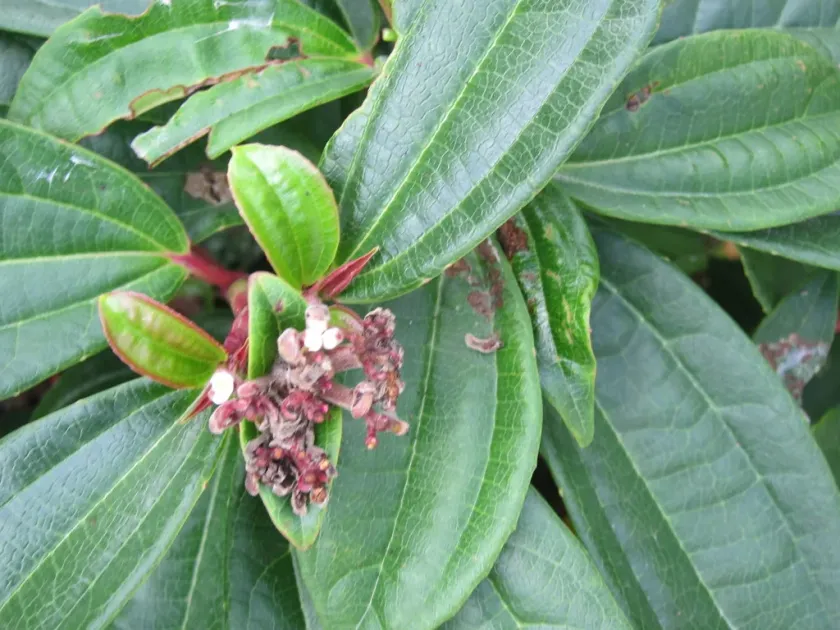
Description
Growing requirements
This interspecific hybrid, belonging to the Adoxaceae family, is a highly valued evergreen ornamental shrub known for its robust foliage and compact growth habit.
Cultivation requires fertile, well-drained soil with a slightly acidic to neutral pH. It is essential to prevent waterlogging, as the root system is susceptible to decay in heavy, saturated soils.
The ideal environment for this shrub is a partially shaded location that offers protection from harsh winter winds and intense afternoon sunlight, which can scorch the evergreen leaves.
Agrotechnical maintenance focuses on consistent irrigation during dry spells and applying organic mulch around the base to conserve moisture and regulate soil temperature.
In landscape architecture, this hybrid serves as an excellent candidate for low-maintenance borders, woodland plantings, and ornamental hedging due to its dense and attractive structure.
Main diseases and pests
The most common disease threats include fungal pathogens such as powdery mildew and leaf spot, which thrive in humid conditions and environments with poor air circulation.
Pest pressures are typically associated with viburnum-specific insects, including aphids and the viburnum leaf beetle, which can cause significant defoliation if left untreated.
Integrated pest management strategies are recommended, including early-season inspections and the application of horticultural oils or systemic insecticides when symptoms appear.
Pruning is a critical aspect of plant health; removing crossing branches or deadwood improves airflow within the canopy and reduces the surface area for fungal spores to settle.
Providing optimal growing conditions through proper site selection and balanced fertilization ensures the plant maintains a high level of natural resistance to common pathogens.