
David viburnum
Viburnum davidii Franch.
Description
Growing requirements
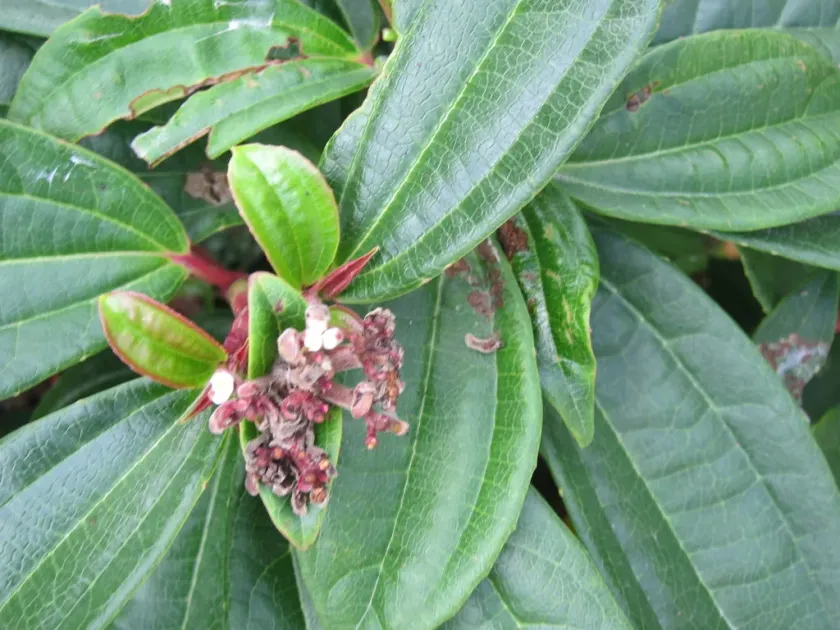
David viburnum (Viburnum davidii) is an evergreen, low-growing shrub belonging to the Adoxaceae family. It is widely recognized for its compact growth habit and its distinctive leathery, deep green leaves that feature deep, parallel venation.
The species originates from western China, where it grows in the understory of temperate forests. This background dictates its environmental preferences, including a need for shade and consistent moisture, making it an excellent candidate for semi-shaded garden locations.
The plant thrives in regions with mild winters, typically within USDA hardiness zones 7 to 9. It requires a sheltered position to protect its evergreen foliage from harsh, drying winds that can cause leaf scorch during the colder months.
Soil requirements are relatively specific: the plant demands rich, acidic to neutral, and well-draining soil. High organic matter content, such as compost or peat, is essential to mimic its natural forest habitat and ensure robust root development.
Regular maintenance practices include consistent irrigation during dry spells and applying mulch around the base of the plant. Mulching helps regulate soil temperature and moisture levels, which is critical for maintaining the health of this shade-loving evergreen.
Main diseases and pests
David viburnum is susceptible to several fungal diseases, particularly in humid or stagnant air environments. Powdery mildew is a common concern, often manifesting as white fungal patches on the surface of the leaves.
Pest pressures primarily include aphids and spider mites. These insects can quickly colonize the undersides of leaves, causing yellowing and premature leaf drop if not managed with appropriate horticultural soap or systemic insecticides.
Root rot is a significant threat, usually caused by poor drainage or overwatering. Once root tissues are compromised by pathogens, the plant may show rapid decline, making effective water management the primary preventive strategy.
Proper spacing during planting is vital to allow for adequate airflow, which significantly reduces the humidity-related risks associated with fungal infections. Avoid overhead watering in the evening to minimize moisture retention on the foliage.
If signs of disease or pest infestation appear, a prompt application of specialized protective agents is required. Always monitor plant health during early spring, as this is when the shrub is most vulnerable to recovering from winter stress.