
Koreanspice viburnum
Viburnum carlesii Hemsl.
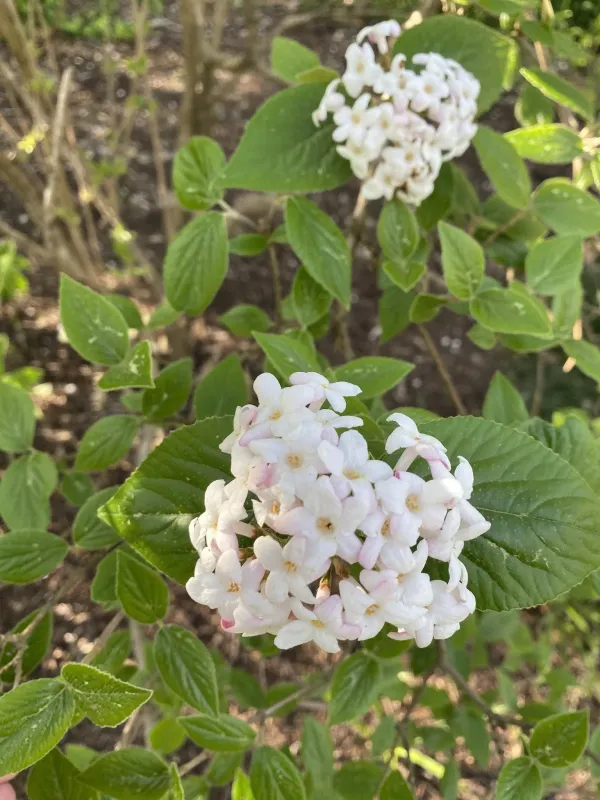
Description
Growing requirements
Koreanspice viburnum (Viburnum carlesii) is a deciduous flowering shrub belonging to the Adoxaceae family. Native to Korea and Japan, it is highly prized by gardeners for its clusters of waxy, pink-to-white flowers that emit an intense, spicy, clove-like fragrance.
The species requires a site with full sun to partial shade. While it is adaptable, it thrives best in well-drained, slightly acidic to neutral soils that are rich in organic matter. Proper drainage is essential, as the plant is prone to root rot in waterlogged conditions.
Regarding climate, this shrub is relatively hardy, though it benefits from protection against harsh, drying winter winds. It prefers a temperate climate where it can enjoy cool, moist spring weather, which is the peak season for its spectacular inflorescences.
Agronomic maintenance is relatively straightforward: it involves moderate watering during dry spells and the application of balanced fertilizer in early spring before new growth appears. Minimal pruning is required to maintain its natural, rounded, and attractive growth habit.
In terms of utilization, it is an excellent choice for ornamental borders and foundation plantings. It is specifically recommended for placement near pathways or outdoor living areas, where the sweet fragrance of the spring blossoms can be most appreciated by people.
Main diseases and pests
Typical pests affecting this plant include aphids, which often attack new growth in the spring, leading to curled leaves. Scale insects can also occasionally infest the bark, requiring horticultural oil applications for effective control.
Fungal diseases like powdery mildew are the most common concern, especially in environments with poor air circulation or high humidity. Maintaining healthy spacing and removing fallen leaves in autumn helps significantly reduce the risk of infection.