
Great mullein
Verbascum densiflorum Bertol.
Description
Sowing dates
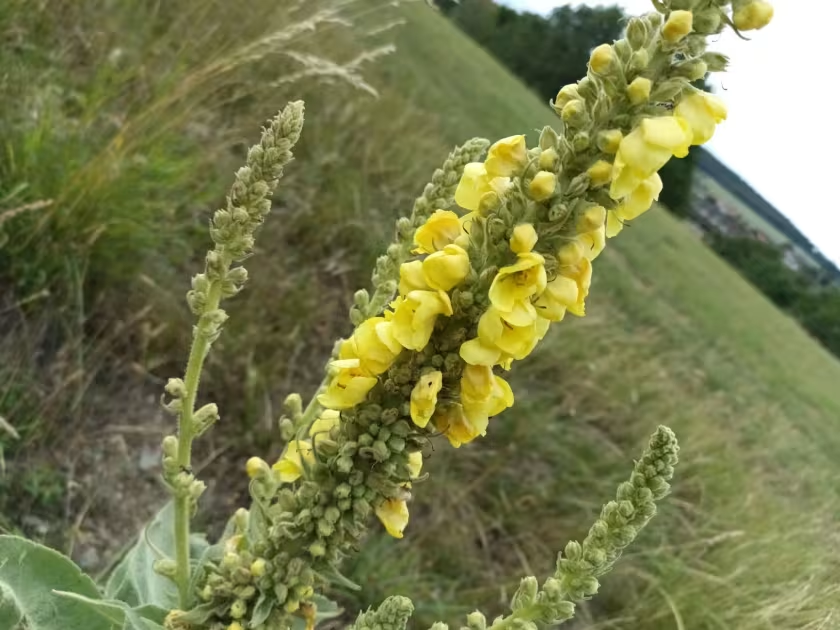
Great mullein (Verbascum densiflorum Bertol.) is a biennial plant belonging to the Scrophulariaceae family. In its first year, it develops a large basal rosette of leaves, while in the second year, it produces a tall, flower-bearing stalk.
Seeds should be sown in spring once the soil temperature is stable. Due to their small size, they are broadcasted or drilled thinly on the soil surface, requiring only light pressing without deep burial into the soil.
Proper spacing is crucial for high-quality production. Thinning the seedlings to a distance of 40–50 cm ensures that each plant has enough space to develop a strong root system and a sturdy, tall stalk.
The plant performs best in full sunlight. Exposure to direct light is essential to maximize the concentration of active pharmaceutical compounds in the flowers during the second year of growth.
Maintenance during the first few weeks after emergence is vital. Keeping the field free from weeds allows the mullein to establish its deep taproot, which is essential for survival during its biennial cycle.
Growing requirements
Great mullein is highly adaptable but prefers well-drained, sandy, or loamy soils. It avoids waterlogged areas, as stagnant moisture can cause root rot, especially during the overwintering phase of the basal rosette.
The plant is noted for its drought tolerance. The dense layer of hairs on the leaves acts as an insulator, reducing transpiration and allowing the plant to survive in arid conditions.
Soil pH should ideally be neutral to slightly alkaline. While the plant can grow in poor soils, moderate fertilization before planting can significantly improve the biomass and yield of the flowering stalks.
Field location should provide protection from high winds, as the tall flower spikes can be prone to lodging, which complicates harvesting and degrades the quality of the delicate petals.
Good soil aeration is beneficial for initial growth. Regular inter-row cultivation helps in maintaining structure and reducing soil compaction, which supports healthy taproot development.
Main diseases and pests
The most common disease affecting this crop is powdery mildew, which appears as white dusty spots on leaves, especially during periods of high humidity and poor air circulation.
Aphids are the primary insect pests, colonizing the flower buds and young leaves. Their feeding habits can lead to stunted growth and reduction in the overall harvest quality.
Caterpillars of certain moth species may consume the leaf tissue. Monitoring the plants during the early season is necessary to implement control measures before significant damage occurs.
Root rot caused by fungal pathogens is a risk in poorly drained fields. Crop rotation and site selection are the most effective management tools for preventing these soil-borne threats.
Preventative cultural practices, such as maintaining adequate plant spacing and removing crop debris after the season, significantly reduce the pressure of pests and diseases.
Harvesting
Harvesting requires precision as only the yellow corollas (petals) are used for medicinal purposes. They are collected daily as they open, usually in mid-morning after the dew has evaporated.
Since the flowers open sequentially along the spike over several weeks, the harvesting period is extended. It is essential to pick only the fresh, fully expanded flowers to ensure high quality.
Post-harvest handling is critical; the flowers must be dried immediately in a shaded, well-ventilated area or a controlled dryer. Temperatures should remain between 40°C and 45°C to preserve their color.
If dried correctly, the petals retain a bright yellow color and a subtle, pleasant aroma. Darkening of the petals indicates improper drying conditions or exposure to moisture during the process.
The final yield is measured by the total weight of the dried corollas. High-quality dry material is in demand for its soothing properties in herbal medicine and tea blends.